What Causes Farmers to Return to the Slopes of Volcanoe to Begin Growing Crops Again

Volcanic Ash, Insecurity for the People but Securing Fertile Soil for the Future
1
Department of Soil Science, Faculty of Agriculture, Andalas University, Kampus Limau Manis, Padang 25163, Indonesia
2
Department of Estate Crops, Payakumbuh, Agriculture Polytechnic Institute, Kampus Politani Tanjung Pati, fifty Kota, Due west Sumatra 26271, Indonesia
iii
School of Life and Environmental Sciences, The University of Sydney, 1 Central Avenue, The Australian Technology Park, Eveleigh, NSW 2015, Australia
*
Author to whom correspondence should be addressed.
Received: 18 Jan 2019 / Revised: 9 March 2019 / Accepted: 24 May 2019 / Published: 31 May 2019
Abstract
Volcanic eruptions touch on land and humans globally. When a volcano erupts, tons of volcanic ash materials are ejected to the atmosphere and deposited on country. The hazard posed by volcanic ash is non limited to the area in proximity to the volcano, but tin can also bear upon a vast area. Ashes ejected from volcano's affect people'due south daily life and disrupts agricultural activities and damages crops. Nevertheless, the positive issue of this natural outcome is that it secures fertile soil for the future. This paper examines volcanic ash (tephra) from a soil security view-signal, mainly its capability. This newspaper reviews the positive aspects of volcanic ash, which has a loftier capability to supply nutrients to found, and can also sequester a large amount of carbon out of the atmosphere. We study some studies around the world, which evaluated soil organic carbon (SOC) accumulation since volcanic eruptions. The mechanisms of SOC protection in volcanic ash soil include organo-metallic complexes, chemical protection, and physical protection. Ii example studies of volcanic ash from Mt. Talang and Sinabung in Sumatra, Indonesia showed the rapid aggregating of SOC through lichens and vascular plants. Volcanic ash plays an of import role in the global carbon cycle and ensures soil security in volcanic regions of the world in terms of boosting its capability. However, at that place is besides a human dimension, which does not go well with volcanic ash. Volcanic ash can severely destroy agricultural areas and farmers' livelihoods. Connectivity and codification needs to ensure farming in the expanse to take into account of take chances and build appropriate accommodation and resilient strategy.
1. Introduction
Volcanic activity has a significant impact on the world'southward ecosystem. Its eruption is catastrophic, spewing lava and ashes, posing a serious hazard to humans and their livelihoods. Ashes ejected from the volcano tin cause much nuisance to farmers, burying agricultural lands, and destroying crops. The ashes can also present harmful impacts on human health and animals, contaminating infrastructures, and disrupting aviation and land transport. The land area threatened by volcanic eruptions in Republic of indonesia is around 16,670 kmii and affects around 5,000,000 people.
However, the aftermath of volcanic eruptions leads to the globe'southward most productive soils, volcanic soils. Soils derived from volcanic ash or tephra have the highest capacity to store carbon due to their poorly crystalline minerals that have large surface areas enabling complexation and concrete protection. These soils also retain the near persistent soil organic carbon pools. It was estimated that, while volcanic ash soils (Andosols) cover but 0.84% of the world's surface, they incorporate about five% of global soil carbon [i]. Soil organic carbon (SOC) stock for Andosols is estimated to be effectually 254 t C ha−1 in the upper 100 cm [ii]. Soils derived from volcanic ash are likewise known to have a high homo conveying chapters, as evidenced by the dense population in areas nearly volcanoes effectually the world [three]. Dutch soil scientist E.C.J. Mohr in 1938 [four] compared population densities of different districts near Mount Merapi, Central Java, Republic of indonesia, and found higher population densities in areas with soils derived from volcanic ash. While SOC sequestration in volcanic ash soils (Andosols) have been widely discussed and reviewed, east.thou., Reference [five], the carbon sequestration potential of tephra is less discussed. This soil material is particularly important in areas with volcanoes such every bit Indonesia, Philippines, Japan, New Zealand, Hawaii and Pacific Islands, the Caribbean islands, Iceland, and South America.
This newspaper aims to examine volcanic ash (tephra) from a soil security viewpoint, its main capability. Tephra rejuvenates soil and provides nutrients reserve, and has a large potential to sequester carbon over a relatively short flow. This capacity ensures the security of our soils in active volcanic regions of the world. Its carbon sequestration potential tin can fulfill and even exceed global soil carbon initiatives, such as the 4 per mille soil carbon [six]. All the same, volcanic ash's condition for agriculture is poor every bit it is notwithstanding unweather. This paper reviews the part of volcanic ash in sequestering SOC. Information technology provides two example studies from recent volcanic eruptions from Republic of indonesia. It further discusses how a soil security framework may exist practical in areas suffering from abiding volcanic eruptions.
2. Volcanic Materials and Their Chemic Composition
Materials ejected from volcanic eruptions are classified co-ordinate to their form. Tephra describes all pyroclasts that leaves a volcanic vent by air, regardless of their blazon, size, and shape. It is besides called volcanic ash, merely sensu stricto tephra refers to ashes that are less than two mm in bore. Pyroclasts take a broader meaning than tephra, which includes consolidated and unconsolidated materials [7].
The type and abundance of primary minerals in tephras depends on the volcano, but usually made upward of volcanic glass (silica), quartz, plagioclase, pyroxenes, hornblende, biotite, olivine, etc. [8], examined tephra from the eruptions from Ruapehu volcano on 11 and fourteen October 1995 in New Zealand. Tephra from the two eruptions contained 3.0 and 0.seven% by mass of sulphur (S), significantly raised soil sulphate levels in the affected area. Besides, its fine grain caused it to be oxidised speedily, lowering the soil pH. Whereas, the composition of tephra from Mt. Talang in West Sumatra, Indonesia was dominated by labradorite (35%) and rock fragments (21%) [nine,10,11]. The heavy mineral fraction consisted of hypersthene (11%), augite (3%), opaques (3%), and hornblende (traces). While the chief mineralogical composition of tephra from Merapi volcano (Fundamental Java, Republic of indonesia) consisted of more non-crystalline (53–60%) compared to crystalline components [12].
3. Volcanic Soils and Carbon Storage Capacity
When first deposited from volcanic eruptions, pristine tephra contained no organic carbon, simply may incorporate some inorganic carbon. The inorganic carbon originated from volatile elements emitted during a volcanic boom in the course of carbon dioxide, carbon monoxide, methane, and carbonyl sulphide. In the absenteeism of microorganisms during and later on a volcanic eruption, this inorganic carbon flux immediately reacted with water molecule or calcium (Ca) to class carbonic acrid or calcium carbonate [xiii]. However, every bit the volcanic ash weathered, information technology produced non-crystalline and poorly crystalline minerals and oxides [fourteen]. The big specific surface expanse (∼700 mg−1) and great reactivity of these poorly crystalline minerals are generally responsible in the complexation and stabilization of organic thing. Accumulation of organic carbon in the volcanic ash depends on the interaction among a series of biotic and abiotic factors.
Zehetner [15] examined if organic C accumulation in volcanic soils can offset COii emissions from volcanic activities. He compiled data from studies conducted on Holocene volcanic deposits in unlike parts of the earth to assess the SOC accumulation potential of volcanic soils (Figure one). He found that SOC accumulation rates decreased with increasing soil historic period, with the largest rate 0.5 t C/ha/year in the first 50 years and decreases to less than 0.ane t C/ha/year after 1000 years. While soil carbon content can exist quite high in the surface horizons (up to 10%), the aggregating of organic matter was most rapid in the first 100 years. He further suggested that there is an upper limit of volcanic soils C sequestration at approximately xx Tg/yr, which is relatively insignificant in the global terrestrial C cycle. Nevertheless, we still believe that at that place is a potential to utilise volcanic ash equally a terrestrial carbon sequester.
A study from a chronosequence in the Etna region in Italia [16], where the soils were adult from lava, showed that a 125-twelvemonth menstruum of pedogenesis resulted in a SOC accumulation rate of 0.3 t C/ha/year. The charge per unit of SOC accumulation in the 91-twelvemonth-old tephra deposit of Mt. Bandai (Japan) is betwixt 0.10 and 0.58 t C/ha/yr, with a rapid accumulation rate during the early stage of soil development [17]. However, another written report on volcanic soils from Sierra del Chichinautzin Volcanic Field in Mexico indicated that, afterwards ten,000 years, the C accumulation rates are only in the order of 0.02 to 0.07 t C/ha/year [xviii].
Here we report studies that evaluated SOC accumulation since volcanic eruptions.
3.1. Krakatau, Republic of indonesia
Mount Krakatau erupted on 27 August 1883 and formed a remnant Rakata Isle, which was covered by ashes. The tropical island with high rainfall (2500–3000 mm/year) led to a rapid recolonization of vegetation and now a well-adult woods. Analysis of soils of Rakata, 110 years after the eruption showed that the SOC content ranges from 49 t C/ha at 720 m acme to 140 t C ha at 480 m elevation [19]. This is equivalent to rates of aggregating between 0.44 to 1.iii t C/ha/year.
Within the Krakatau circuitous, there are four islands: Sertung, Panjang, Rakata, and Anak Krakatau. Mt. Anak Krakatau meaning Child of Krakatau emerged from the caldera in the 1930s and is equanimous of lava and pyroclastic deposits from the late Mt. Krakatau. Since its emergence from the sea, Anak Krakatau has progressively grown and considered as 1 of the fastest growing volcano in Indonesia. Anak Krakatau erupted on 22nd December 2018, ejecting tons of ashes and caused a collapse of Southward-W gradient of the isle. When the authors visited Mount Anak Krakatau in 2015 (Figure 2), the organic C content of the soil range from i.3 to one.7%, or approximately 49 t C/ha in the meridian 25 cm, or an average accumulation rate of 0.34 t C/ha/year.
3.2. Mount Pinatubo, Philippines
Mt Pinatubo erupted on June 1991 ejected a large volume of ashes and lahars covering large agronomical areas in Central Luzon. The ash contains a high amount of volcanic ash and about 1.7 g/kg of P2O5. It appears that lahar mixed with soils promote regrowth of vegetation, mainly grasses, and leguminous plants. Seven years later the eruption, the lahar deposit has an OC content of 0.8% and nitrogen content of 0.066% [20].
iii.3. Mount St. Helens, U.s.
20-v years afterwards the eruption of Mt. St. Helens, the concentration of full soil C and N has increased to 4 and 0.4 g kg−1, respectively [21]. Two species of perennial lupine (Lupinus Lepidus and Lupinus latifolius) were the first establish colonized the volcanic ash deposits. These two legumes are an important factor in ecosystem development and plant succession following volcanic disturbance. They were able to colonize and persist on volcanic deposits because of their ability to set atmospheric N2 via symbiosis with Rhizobium, and subsequently, accumulate organic thing. Total C increased at an average annual charge per unit of about 46 mg kg−1 (29 ± 7 kg ha−one) under bare soil, 128 mg kg−1 (lxx ± 17 kg ha−1) under live lupines and 161 mg kg−1 (88 ± 17 kg ha−ane) under expressionless lupines. The carbon content after 25 years of eruption is nonetheless quite small (4000 mg kg−1) with pocket-sized SOC accumulation rates. They hypothesised that the organic thing inputs are in rest with outputs [21].
3.iv. Iceland
Iceland has a high concentration of agile volcanoes, and its soil is mainly Andosols derived from tephra and aeolian sediments of volcanic drinking glass [22]. SOC sequestration rate in a sandy desert following a seven-year restoration process was evaluated [21]. The desert'southward parent fabric is volcanic glass with a low carbon concentration, and they establish an almanac carbon aggregating of 0.4–0.63 t C/ha. Meanwhile, sequestration rates of 0.23 t C/ha/year post-obit tree plantation in a degraded heathland was reported [23]. Another written report reported a long-term carbon accumulation rates of 0.17–0.3 t C/ha/twelvemonth in Southwest Iceland [24].
Another study [25] reported SOC aggregating in a l-yr-old volcanic island Surtsey. Seagull colony on the island provided nutrient enriched areas, and thus SOC concentration has been increasing from 0.08% (taking the 1986 value as baseline SOC concentration, the commencement year of permanent seabird colonization) to 0.ix ± 0.3% on deep tephra sand and 4.6 ± 0.4% on shallow tephra sand. The accumulation rate is between 0.1-0.4 t C/ha/year.
three.5. Kasotchi Island, Alaska
Kasatochi volcano erupted in August 2008 and cached a small island in pyroclastic deposits and fine ash. Afterward, microbes, plants, and birds begun to re-colonize the initially sterile surface. Five years post-eruption, SOC content is still relatively small (<0.2% C). However, microbial activities in pyroclastic materials with organic matter (OM) inputs were ane or two lodge magnitude larger than in materials without OM input [26].
iii.6. Hawaii
Soil evolution'due south effect on SOC stock forth chronosequences in Hawaii was evaluated [27]. The study plant that SOC content followed a similar tendency as the soil development where volcanic parent materials weathered to non-crystalline minerals during the beginning 150,000 years, followed by a decline in the amount of non-crystalline minerals and an increase in stable crystalline mineral accumulation. Similarly, SOC accumulated to a maximum after 150,000 years then decreased by l% over the side by side four 1000000 years. They explained this through a modify in SOC-mineral stability mechanisms during soil formation [28]. As these increase over fourth dimension, the minerals lose the capacity to stabilize carbon or the soil becomes saturated.
Reference [29] evaluated a chronosequence of 10, 52, and 142-year-old lava flows on Mauna Loa, Hawaii. They constitute aboveground biomass accumulated apace in the first decade of primary succession. Notwithstanding, SOC accumulation lagged backside biomass, with negligible SOC at the x-year site. SOC aggregating rates at 0.13 and 0.27 t C/ha/year were constitute at the 52- and 142-year sites. They concluded that weathering rates of lava, in part, regulate rates of nitrogen fixation in these immature ecosystems.
4. The Weathering of Volcanic Ash
Most studies on the main succession of volcanic islands focused primarily on flora and fauna community changes and hardly look into the evolution of soil carbon. In early on stage of weathering, cations were leached from volcanic ash when they were in contact with h2o and significantly increased the concentration of constitute nutrients in soils. Equally such, re-vegetation or plant recovery prevailed immediately. Volcanic ash weathered rapidly to grade short-range social club alumino-silicate mineral (allophane, imogolite). These non-crystalline clay minerals accept a high capacity to protect SOC in volcanic soils.
The establishment of plants and biomass led to the accumulation of SOC. Simultaneously, as pools of carbon developed, the volcanic ashes underwent weathering or decomposition processes. Nitrogen supply to pioneer plants was hypothesised as a central to the re-vegetation of volcanic ash affected areas [20]. It is continuous feedback that the increment in SOC will enhance release of nutrients and increase in cation exchange capacity and h2o holding capacity. These have positive effects on plant growth. In one case the soil has increased its fertility, secondary colonizers volition establish, which in turn further raise SOC accumulation.
The decomposition of volcanic ash is probable to be proportional to the quantity of inputs N item from not highly lignified institute biomass of lupines [30]. Net migration of plant nutrients from volcanic ash leads to progressive stages of plant succession from assembly to interaction [31]. The quantity and quality of substrates released from volcanic ash during decomposition influence the rate and blueprint of plant succession through physical and biological amelioration of bare sites and subsequent interaction among colonists [31,32]. They also affect the succession beneath ground as the numbers, multifariousness, and activity of microbial are increased and interaction between lupines and fungi.
Soil carbon storage on volcanic soils across a high-acme climate gradient on Mauna Kea, Hawaii showed that, after twenty ky, pedogenic processes take altered the nature and composition of the volcanic ash such that it is capable of retaining SOC [33]. The sites have a cold climate and depression rainfall (~250–500 mm). Nether such dry condition, the rate of carbon supply to the soil was driven by coupling of rainfall to a higher place basis plant product.
Tephra deposited on pinnacle of soil also provides a unique weathering pathway. Information technology was hypothesised that buried organic-rich soil pumps protons upward to the tephra layer, which acts as an alkaline trap for CO2 [34]. Pioneer establish (blue-green algae or blue-green alga) used the CO2 to initiate environment recovery. Black and brown patches were observed on tephra layer equally the growth of cyanobacteria progress. And so, the algae mat provides suitable habitats to support mosses and higher plants life [35].
5. SOC Stabilisation Mechanisms
The ability of Andosols to shop a large amount of C is mainly due to the authorisation of short-range-ordered dirt minerals (allophane, imogolite, and ferrihydrite) and metal-humus complexes (Al/Fe–humus complexes) in their colloidal fraction. Withal, there are also non-allophanic Andosols, where Al-humus complexes are ascendant. The mineralogical properties of these non-crystalline materials present a high reactive surface area and are regarded as the major agent of C stabilisation.
A study on volcanic soils from Republic of chile and found that SOM has the largest correlation with Al, rather than with clay content and climatic weather [v]. They concluded that Al is the main factor for immobilization of SOC in acid volcanic soils.
Soil organic matter (SOM) density fractionation report [36] on a soil horizon derived from tephra from the last eruptive phases of the Piton des Neiges in the Reunion Island, showed that the largest proportion (82.6%) of organic matter was associated with minerals in organo-mineral complexes. Imogolite-type materials bound 6-fold more OM than anorthoclase, and 3.5-fold more OM than fe oxides. Buried horizons, which were dominated by crystalline minerals (feldspars, gibbsite), have the to the lowest degree capacity to store organic thing and the fastest carbon turnover. In dissimilarity, cached horizons dominated by poorly crystalline clay minerals (proto-imogolite and proto-imogolite allophane) shop large amounts of organic matter with low carbon turnover.
Allophane spherules tend to form nanoaggregates up to about 100 nm in bore [37,38]. The nano pores both within and between nanoaggregates provide concrete protection to SOC, where they cannot be accessed past microbes [39]. The organo-mineral complexes of volcanic soils tin likewise protect soil carbon from disturbances caused by forest management, thus preventing potential carbon loss [40].
Mechanisms for chemical and physical stabilization of SOC in volcanic ash soils can be summarised every bit Reference [41]:
-
directly stabilization of SOC in organo-metallic (Al-humus) complexes,
-
indirect chemic protection of SOC (notably aliphatic compounds) through depression soil pH and toxic levels of Al, and
-
physical protection of SOC by the very large micro- or nanopores.
half-dozen. Case Study—Indonesia
The following case report from two areas in Republic of indonesia showed how tephra from a fresh eruption could accrue a high amount of carbon in a relatively short menstruation [35].
six.1. Pot Experiment, Mount Talang
Mount Talang in West Sumatra, Indonesia erupted in April 2005 (Figure 3), and ashes from the eruption were nerveless [twoscore]. The texture was a sandy loam, with coarse (2.0–0.05 mm), medium (0.05–0.002 mm) and fine (<0.002 mm) particles of 13, 68 and xix%, respectively. Based on the silica (SiO2) content of 57%, the tephra of Mt. Talang is considered as a basalto-andesitic ash. Cation exchange capacity (CEC) was low with a value of v.50 cmolc kg−ane.
A pot experiment was carried out to report C accumulation on the tephra. The experiment was conducted in wired-business firm. There were 2 master treatments: (1) A unmarried tephra layer or without soil, (two) a tephra layer was placed above existing soil surface (fifteen cm of A horizon and 15 cm of B horizon). The thicknesses of the tephra layer were 0, 2.5, and v.0 cm simulating tephra deposition. The experiment is a randomized design with tree replicates on each treatment. Five mm of filtered water was added daily to each pot throughout four years of experiment. The water added was approximately equal to fourteen years of precipitation in the Mt. Talang area.
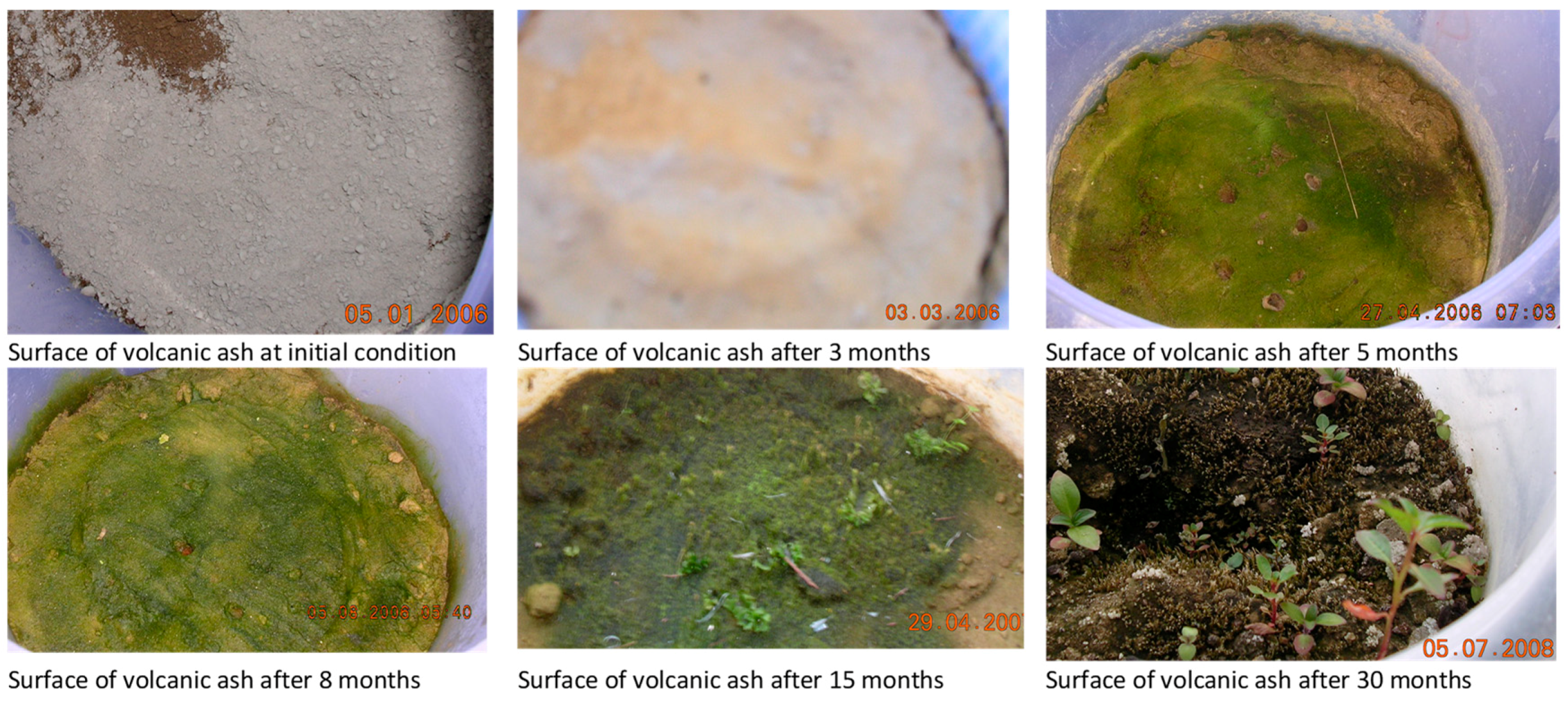
The first noticeable change on the tephra layers was transformation of tephra color. The moist color of the surface tephra layer changed from light gray to very pale brown later on 24 months and becoming pale brown after 46 months (Figure 4). This color transformation can be attributed to oxidation and liberation of Fe from tephra grains as well as accumulation of OC [xl].
After two months, blue-green algae (cyanobacteria) started to colonize the blank tephra layer formed an algae mat. After 16 months, the surface was transformed into a dark-green film of lichen. Vascular plants (grasses and shrubs) started to establish after two years (Figure 4). Inorganic carbon was detected by a SEM-EDX (Effigy v).
The initial total C content of the tephra is 0.19%, and after 46 months, the C content of the 2.5 cm tephra layer on top of the soil increased to ane.75%, and the C content of the 5 cm tephra layer on top of the soil increased to 0.9%. Meanwhile, tephra by itself accumulates less carbon with a concentration of 0.vi%. Sequestration rates of 0.2 to 0.5% C per year or 0.5–0.7 t C/ha/year were observed for volcanic ashes, which were added on top of soils (Effigy 6).
After 46 months root hyphae were observed with a SEM. The hyphae were attached to volcanic ash grains (Figure 7 and Figure 8) and may aid in weathering of the materials and helped sequester more C in soil. The ashes contain light minerals include labradorite (35%) and rock fragments (21%), whereas the heavy mineral fractions consist of hypersthene (11%), augite (three%), opaques (three%) and hornblende (traces) (Figure 9).
This report indicated that volcanic ash could sequester carbon rapidly and in large quantities. However, plants and microbial activities are required to enhance the C sequestration potential for pristine volcanic ashes.
Cyanobacteria have the ability to utilize both CO2 and bicarbonate (HCO3) as an inorganic carbon source to produce biomass. The growth of blue-greenish algae on the soil surface can significantly increment SOC.
The written report [40] found that soil OC accumulated approximately linearly with fourth dimension (Figure 5). The OC content of tephra layer increased significantly later 8 months and was ix times higher after 46 months as more vegetation emerged. The rate of OC accumulation on tephra on existing soil layer was 5–15 times faster than just only tephra. Rate on 2.v cm tephra layer (with soil) was larger than 5.0 cm, highlighting the importance of life on existing soil. Sources of OC accumulated in the tephra layer during the first year was blue-green alga, the second year was from cyanobacteria and lichens, and the third to fourth year was from shrubs or grasses.
six.2. A Natural Experiment, Mt Sinabung
Mt Sinabung in North Sumatra was fallow for more than 400 years and came active again in 2010 (Effigy x). Eruptions were recorded in 2010, 2013, 2014, and 2016. On 28th January 2014, Sinabung erupted spewing pyroclastic menses and ash. Volcanic ash carried past pelting-covered areas of the Sigarang Garang village, which is located Northeast of the human foot of the volcano (Figure eleven). After accounted safe, the local people returned to the village and cleaned up the substantial amount of ash and bagged them.
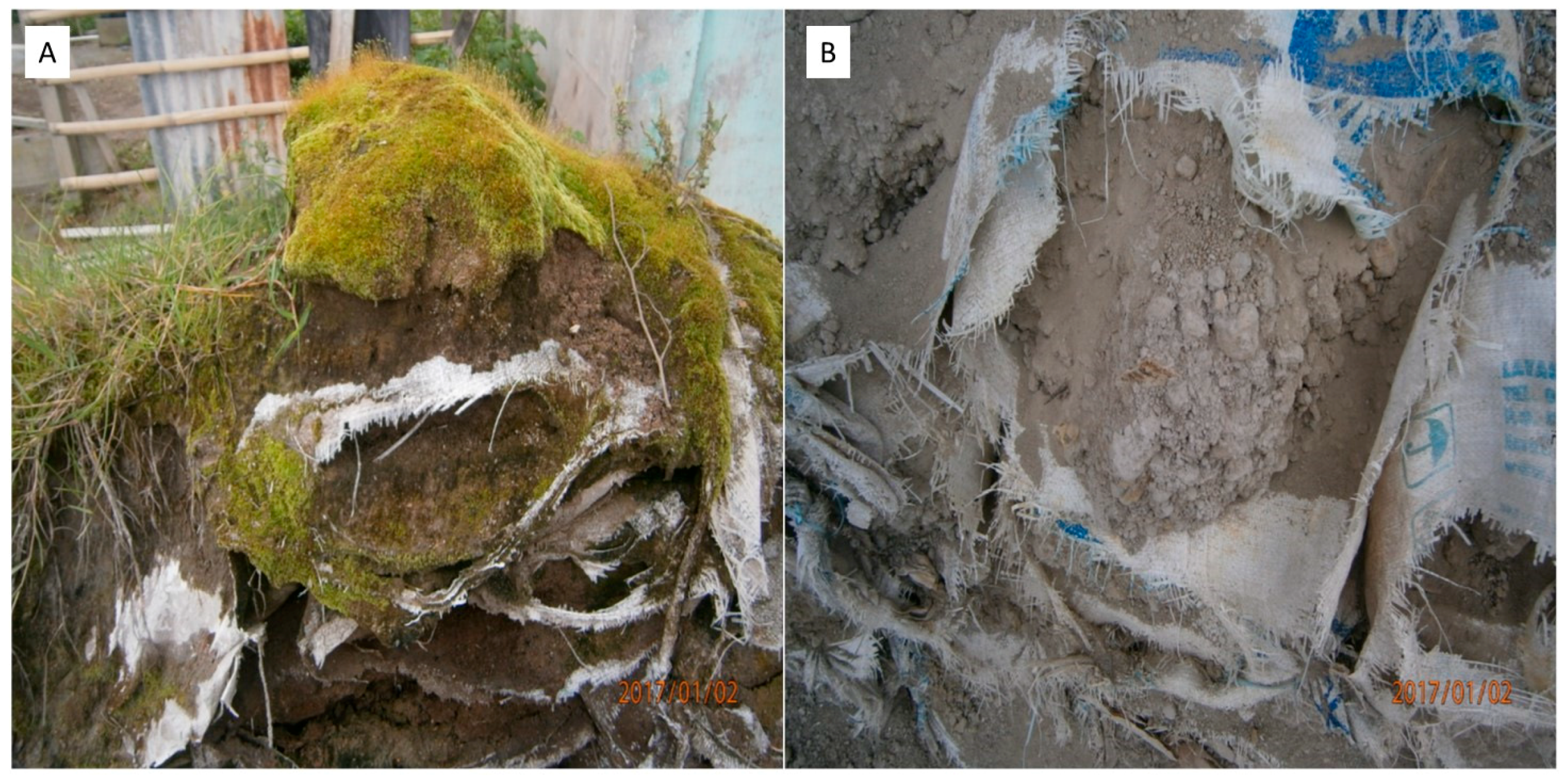
Nosotros visited the village in Jan 2017 and plant ashes that were exposed to rainfall were already colonised by lichens, and some has established grasses. Ashes that were stored and not exposed to rainfall were in a dry status without any plants (Figure 12). Tabular array 1 and Table two show some chemical assay of these samples.
The ash has an inorganic C between 0.1–0.two%. After three years of lichens colonisation, the C content increased to 4.ane% (Table 1). Additionally, in materials covered with grass, the C content increased to 1.6%. This limited information demonstrated the loftier capacity to accumulate Embrace a short flow.
six.3. Volcanic Ash, the Role of Soil Security
Here we would similar to link volcanic ash in the framework of soil security [41] in the example study of Sinabung based on the framework outlined in Bouma [42].
Farmers in the area near Sinabung suffered because of repeated volcanic eruptions since 2010 and ashes constantly existence deposited on their farming land. While the volcanic materials are valuable in terms of ecosystem services and boosting soil's capability, the ashes acquired farmers lost their income. An estimated 53,000 hectares of farmland was destroyed by volcanic ash in 2014. Local farmers accommodation includes reducing cultivation area, regularly hosing off the ashes from plants, and planting quick maturing vegetables [43]. Some farmers were resettled to new area by the local government in Siosar area, Karo regency, with each family unit getting a 500 m2 plot for farming. In the new area, social, cultural, and economical life accept flourished.
To ensure soil security for farmers in the future, the volcanic ash possess high capability for supplying nutrients and arresting carbon, still, it'south weathering took fourth dimension (2–4 years). The current status is an economic threat for farmers and if eruption continued information technology volition exist dangerous to live in the expanse. The role of connectivity is to inform farmers on the danger of volcanic threats and educating them about the risks. Farmers' perception of adventure of volcanic hazards is a complex interaction between cultural beliefs and socio-economical constraints [44]. They likewise need to be informed on the valuable ashes that will go on their soil fertile for centuries. Farmers need to be trained to have a diverse range of cash crops as buffer. Or temporary shift to other types of occupation [45]. Policy from the local government need to brand certain farmers are well-equipped to handle the disaster.
An case from Kinali village in Siau Island, role of the archipelagic district of Sitaro, North Sulawesi Province, Indonesia demonstrated that people have adjusted to volcanic eruptions from Mountain Karangetang [46]. This volcano is classified as both category two (high take a chance of lava, lahars, dense volcanic ash, and the possibility of pyroclastic flows) and category 3 (oft afflicted by pyroclastic flows, lava, lahars, dense volcanic ash) by the Indonesian Government. Nevertheless, the villagers realized that the volcano eruption bring fertility to the soil and in turn produce high-quality nutmeg that generates good income. The keys to such accommodation is social cohesion, strength cognition and skills to confront hazards, availability of skilful infrastructure, availability of food and water to cope with shortages, enough saving, and appropriate political support [46].
seven. Ecosystem Recovery after Volcanic Eruption
Tephra, which initially does not incorporate organic carbon and life class, has a high capacity to capture CO2 from the atmosphere through plants. The fine-size tephra, when exposed to the natural atmospheric environment, can store moisture, which enabled blue-greenish algae to colonise the blank surface layer forming an algae mat. This succession is followed by the development of layers of lichen, then colonisation of vascular plants.
Ecosystem recovery after volcanic ash deposition depends on the thickness of the deposit. Re-vegetation was faster on shallow ash layer (2.five cm) compared to thicker tephra layer, with a pedogenic time between 6 to 12 months [36]. The thin volcanic ash layer has positive nutrient responses to vegetation. The expanse effectually Mount St. Helens in Washington Country USA with 10–twenty cm thick tephra after the eruption in 1980 started to recover later ten years. Meanwhile, in Krakatau islands in Indonesia with >100 cm thick of ash layer, plant recovery and new soil evolution only commenced afterwards 100 years [47]. While both areas are quite different in terms of climate and parent materials, information technology shows the importance of the thickness of the ashes.
Survival of vegetation underneath of tephra layer plays an important role on the reestablishment of ecosystem. Response capability of the buried plants is related to rhizome, shoots, and seeds, which survived afterward the eruption. Annual plants recovered faster than perennial plants [48]. Initially, plants suffered nutrient deficiency such as N and P to growth [20] and the presence of nitrogen-fixing pioneer plants can advance plant recovery or applying nitrogen fertilizer [49].. Organic matter in these volcanic soils tends to be stabile as they formed stabile organomineral complexes and physically protected.
8. Conclusions
Tephra deposited to the soil surface renew the soil and sustain its productivity. Besides, tephra has a large capacity to sequester atmospheric carbon. As the ash weathers to secondary minerals more organic carbon tin be preserved and protected in the soil. The protective mechanisms of SOC in these soils include organo-metallic complexes, chemic protection through low soil pH and toxic levels of Al, and physical protection past the micro- or nanopores.
Well-nigh studies on establish succession of volcanic ash regions focused on flora and brute customs changes and rarely look into the development of soil carbon. Accumulation of SOC in these newly-deposited tephra plays an of import role in the development of plants. The increment in SOC in tephra will raise weathering and release nutrients that have positive effects on plant growth. Research on C dynamics and sequestration potential on newly deposited tephra is however rare. Beside its big C sequestration potential, information technology may provide clues on the initial pedogenesis.
Volcanic ash plays an important function in the global carbon cycle and ensures soil security in volcanic regions of the world. However, farmers living in the volcano area also need to be considered. Volcanic ash will severely bear on agronomical expanse and farmers' livelihood. As the value of tephra as new soil fertile materials is yet to be quantified, it is underappreciated and becomes a nuisance for local farmers. Connectivity and codified needs to ensure farming in the area to take into business relationship chance and build appropriate accommodation strategies and resilience.
Author Contributions
Conceptualization, B.M. and D.F.; methodology, D.F., F.I.Thousand., G., M.N.; investigation, D.F., F.I.G., 1000., M.N.; resources, D.F., F.I.G., K., Grand.N.; writing—original draft preparation, B.One thousand., F.I.G., D.F.; writing—review and editing, B.M., F.I.G., D.F.; visualization, F.I.Thousand., M.N.
Funding
D.F., G., and Grand.Due north. were funded by the Ministry of research, Technology and Higher Education of Indonesia with grant number 08/Un.16.17/PP.PBK.G/LPPM/2018. The support from Sydney Institure of Agriculture—The University of Sydney enabled some analyses were carried out at that place.
Conflicts of Involvement
The authors declare no conflict of involvement.
References
- Eswaran, H.; Van Den Berg, E.; Reich, P. Organic carbon in soils of the world. Soil Sci. Soc. Am. J. 1993, 57, 192–194. [Google Scholar] [CrossRef]
- Batjes, Due north.H. Full carbon and nitrogen in the soils of the world. Eur. J. Soil Sci. 1996, 47, 151–163. [Google Scholar] [CrossRef]
- Small, C.; Naumann, T. The global distribution of human population and recent volcanism. Global Environ. Chang. Office B Environ. Hazards 2001, three, 93–109. [Google Scholar] [CrossRef]
- Mohr, East.C.J. The relation between soil and population density in holland Indies. Comptes Rendus Du Congres Int. Du Geogr. 1938, 103, 478–493. [Google Scholar]
- Matus, F.; Rumpel, C.; Neculman, R.; Panichini, M.; Mora, Thou. Soil carbon storage and stabilisation in andic soils: A review. Catena 2014, 120, 102–110. [Google Scholar] [CrossRef]
- Minasny, B.; Malone, B.P.; McBratney, A.B.; Angers, D.A.; Arrouays, D.; Chambers, A.; Chaplot, V.; Chen, Z.-S.; Cheng, K.; Das, B.S. Soil carbon 4 per mille. Geoderma 2017, 292, 59–86. [Google Scholar] [CrossRef]
- Arnalds, O. The Influence of Volcanic Tephra (Ash) on Ecosystems. Adv. Agron. 2013, 121, 331–380. [Google Scholar]
- Cronin, S.; Hedley, Thou.; Neall, V.; Smith, R. Agronomic impact of tephra fallout from the 1995 and 1996 Ruapehu Volcano eruptions, New Zealand. Environ. Geol. 1998, 34, 21–30. [Google Scholar] [CrossRef]
- Fiantis, D.; Nelson, M.; Shamshuddin, J.; Goh, T.B.; Van Ranst, East. Leaching experiments in recent tephra deposits from Talang volcano (Due west Sumatra), Indonesia. Geoderma 2010, 156, 161–172. [Google Scholar] [CrossRef]
- Fiantis, D.; Nelson, M.; Shamshuddin, J.; Goh, T.B.; Van Ranst, E. Conclusion of the Geochemical Weathering Indices and Trace Elements Content of New Volcanic Ash Deposits from Mt. Talang (West Sumatra) Indonesia. Eurasian Soil Sci. 2010, 43, 1477–1485. [Google Scholar] [CrossRef]
- Fiantis, D.; Nelson, Chiliad.; Shamshuddin, J.; Goh, T.B.; Van Ranst, E. Changes in the Chemic and Mineralogical Properties of Mt. Talang Volcanic Ash in West Sumatra during the Initial Weathering Phase. Commun. Soil Sci. Plant Anal. 2011, 42, 569–585. [Google Scholar] [CrossRef]
- Fiantis, D.; Nelson, M.; Van Ranst, E.; Shamshuddin, J.; Qafoku, N.P. Chemical Weathering of New Pyroclastic Deposits from Mt. Merapi (Java), Indonesia. J. Mountain Sci. 2009, 6, 240–254. [Google Scholar] [CrossRef]
- Dahlgren, R.A.; Saigusa, M.; Ugolini, F.C. The nature, properties and management of volcanic soils. Adv. Agron. 2004, 82, 113–182. [Google Scholar]
- Shoji, S.; Nanzyo, M.; Dahlgren, R.A. Volcanic Ash Soils—Genesis, Properties and Utilization; Elsevier: Amsterdam, The Netherland, 1993; p. 288. [Google Scholar]
- Zehetner, F. Does organic carbon sequestration in volcanic soils offset volcanic COtwo emissions? Quat. Sci. Rev. 2010, 29, 1313–1316. [Google Scholar] [CrossRef]
- Egli, M.; Nater, M.; Mirabella, A.; Raimondi, S.; Plötze, Thousand.; Alioth, L. Clay minerals, oxyhydroxide formation, chemical element leaching and humus evolution in volcanic soils. Geoderma 2008, 143, 101–114. [Google Scholar] [CrossRef]
- Morisada, K.; Imaya, A.; Ono, Grand. Temporal changes in organic carbon of soils developed on volcanic andesitic deposits in Japan. Forest Ecol. Manag. 2002, 171, 113–120. [Google Scholar] [CrossRef]
- Peña-Ramírez, V.G.; Vázquez-Selem, L.; Siebe, C. Soil organic carbon stocks and forest productivity in volcanic ash soils of different age (1835–thirty,500 years BP) in Mexico. Geoderma 2009, 149, 224–234. [Google Scholar] [CrossRef]
- Schlesinger, W.H.; Bruijnzeel, L.; Bush, M.B.; Klein, E.Chiliad.; Mace, M.A.; Raikes, J.A.; Whittaker, R. The biogeochemistry of phosphorus after the first century of soil development on Rakata Island, Krakatau, Indonesia. Biogeochemistry 1998, 40, 37–55. [Google Scholar] [CrossRef]
- Shoji, S.; Takahashi, T. Environmental and agricultural significance of volcanic ash soils. Glob. Environ. Res. 2002, vi, 113–135. [Google Scholar]
- Halvorson, J.J.; Smith, J.L. Carbon and nitrogen accumulation and microbial activity in Mount St. Helens pyroclastic substrates afterwards 25 years. Plant Soil 2009, 315, 211–228. [Google Scholar] [CrossRef]
- Arnalds, O. Volcanic soils of Iceland. Catena 2004, 56, three–20. [Google Scholar] [CrossRef]
- Ritter, E. Carbon, nitrogen and phosphorus in volcanic soils post-obit tree planting with native birch (Betula pubescens) and introduced larch (Larix sibirica) in Iceland. Plant Soil 2007, 295, 239–251. [Google Scholar] [CrossRef]
- Gísladóttir, Chiliad.; Erlendsson, E.; Lal, R.; Bigham, J. Erosional Effects on Terrestrial Resources over the last Millennium in Reykjanes, Southwest Iceland✶. Quat. Res. 2010, 73, twenty–32. [Google Scholar] [CrossRef]
- Leblans, N.I.Due west.; Sigurdsson, B.D.; Roefs, P.; Thuys, R.; Magnusson, B.; Janssens, I.A. Effects of seabird nitrogen input on biomass and carbon accumulation after 50 years of primary succession on a young volcanic island, Surtsey. Biogeosciences 2014, 11, 6237–6250. [Google Scholar] [CrossRef]
- Zeglin, L.H.; Wang, B.; Waythomas, C.; Rainey, F.; Talbot, Southward.L. Organic matter quantity and source affects microbial customs structure and role following volcanic eruption on Thou asatochi I sland, A laska. Environ. Microbiol. 2016, 18, 146–158. [Google Scholar] [CrossRef]
- Torn, M.South.; Trumbore, S.Eastward.; Chadwick, O.A.; Vitousek, P.M.; Hendricks, D.M. Mineral control of soil organic carbon storage and turnover. Nature 1997, 389, 170–173. [Google Scholar] [CrossRef]
- Masiello, C.; Chadwick, O.; Southon, J.; Torn, M.; Harden, J. Weathering controls on mechanisms of carbon storage in grassland soils. Global Biogeochem. Cycles 2004, 18. [Google Scholar] [CrossRef]
- Crews, T.E.; Kitayama, K.; Fownes, J.H.; Riley, R.H.; Herbert, D.A.; Muellerdombois, D.; Vitousek, P.Yard. Changes in Soil-Phosphorus Fractions and Ecosystem Dynamics across a Long Chronosequence in Hawaii. Ecology 1995, 76, 1407–1424. [Google Scholar] [CrossRef]
- Gill, R.A.; Boie, J.A.; Bishop, J.Grand.; Larsen, L.; Apple tree, J.50.; Evans, R.D. Linking customs and ecosystem development on Mount St. Helens. Oecologia 2006, 148, 312–324. [Google Scholar] [CrossRef] [PubMed]
- del Moral, R. Limits to convergence of vegetation during early chief succession. J. Veg. Sci. 2007, 18, 479–488. [Google Scholar] [CrossRef]
- Del Moral, R.; Rozzell, 50.R. Long-term effects of Lupinus lepidus on vegetation dynamics at Mountain St. Helens. Plant Ecol. 2005, 181, 203–215. [Google Scholar] [CrossRef]
- Kramer, G.G.; Chadwick, O.A. Controls on carbon storage and weathering in volcanic soils across a high-peak climate gradient on Mauna Kea, Hawaii. Environmental 2016, 97, 2384–2395. [Google Scholar] [CrossRef] [PubMed]
- Ugolini, F.C.; Dahlgren, R.A. Soil development in volcanic ash. Global Environ. Res. 2002, 6, 69–82. [Google Scholar]
- Basile-Doelsch, I.; Amundson, R.; Stone, W.; Masiello, C.; Bottero, J.Y.; Colin, F.; Masin, F.; Borschneck, D.; Meunier, J.D. Mineralogical command of organic carbon dynamics in a volcanic ash soil on La Réunion. Eur. J. Soil Sci. 2005, 56, 689–703. [Google Scholar] [CrossRef]
- Calabi-Floody, M.; Bendall, J.S.; Jara, A.A.; Welland, K.E.; Theng, B.M.; Rumpel, C.; de la Luz Mora, M. Nanoclays from an Andisol: Extraction, properties and carbon stabilization. Geoderma 2011, 161, 159–167. [Google Scholar] [CrossRef]
- Basile-Doelsch, I.; Amundson, R.; Stone, West.E.E.; Borschneck, D.; Bottero, J.Y.; Moustier, S.; Masin, F.; Colin, F. Mineral control of carbon pools in a volcanic soil horizon. Geoderma 2007, 137, 477–489. [Google Scholar] [CrossRef]
- Panichini, 1000.; Neculman, R.; Godoy, R.; Arancibia-Miranda, N.; Matus, F. Understanding carbon storage in volcanic soils nether selectively logged temperate rainforests. Geoderma 2017, 302, 76–88. [Google Scholar] [CrossRef]
- Tonneijck, F.; Jansen, B.; Nierop, K.; Verstraten, J.; Sevink, J.; De Lange, L. Towards understanding of carbon stocks and stabilization in volcanic ash soils in natural Andean ecosystems of northern Republic of ecuador. Eur. J. Soil Sci. 2010, 61, 392–405. [Google Scholar] [CrossRef]
- Fiantis, D.; Nelson, Thou.; Shamshuddin, J.; Goh, T.B.; Ranst, E.V. Initial carbon storage in new tephra layers of Mt. Talang in Sumatra as afflicted by pioneer plants. Commun. Soil Sci. Plant Anal. 2016, 47, 1792–1812. [Google Scholar]
- McBratney, A.; Field, D.J.; Koch, A. The dimensions of soil security. Geoderma 2014, 213, 203–213. [Google Scholar] [CrossRef]
- Bouma, J. Soil Security in Sustainable Development. Soil Syst. 2019, 3, 5. [Google Scholar] [CrossRef]
- Tampubolon, J.; Nainggolan, H.; Ginting, A.; Aritonang, J. Mount Sinabung Eruption: Touch on on Local Economy and Smallholder Farming in Karo Regency, Northward Sumatra. In Proceedings of the IOP Briefing Series: Earth and Environmental Scientific discipline, Singapore, xiv–16 December 2017; p. 012039. [Google Scholar]
- Lavigne, F.; De Coster, B.; Juvin, N.; Flohic, F.; Gaillard, J.-C.; Texier, P.; Morin, J.; Sartohadi, J. People'due south behaviour in the face up of volcanic hazards: Perspectives from Javanese communities, Indonesia. J. Volcanol. Geotherm. Res. 2008, 172, 273–287. [Google Scholar] [CrossRef]
- Bachri, S.; Stötter, J.; Monreal, M.; Sartohadi, J. The cataclysm of eruptions, or an eruption of benefits? Mt. Bromo man–volcano system a case written report of an open-risk perception. Nat. Hazards Earth Syst. Sci. 2015, 15, 277–290. [Google Scholar] [CrossRef]
- Rampengan, 1000.M.F.; Boedhihartono, A.K.; Margules, C.; Sayer, J.; Law, 50.; Gaillard, J.C.; Tien, O.T.North.; Linh, T.T.M. Agroforestry on an Active Volcanic Small Isle in I ndonesia: Prospering with Arduousness. Geogr. Res. 2016, 54, 19–34. [Google Scholar] [CrossRef]
- Arnalds, O. The influence of volcanic tephra (ash) on ecosystems. In Advances in Agronomy; Elsevier: Amsterdam, The Netherlands, 2013; Volume 121, pp. 331–380. [Google Scholar]
- Swedberg, K.C. Effects of Mountain St. Helens ash on Constitute Populations of Shallow Stony Soils; Keller, S.A.C., Ed.; Eastern Washington University Press: Washington, DC, The states, 1986; pp. 256–260. [Google Scholar]
- Del Moral, R.; Woods, D.Chiliad. Subalpine Vegetation Recovery Five Years After the Mount St. Helens Eurptions; Eastern Washington University Press: Washington, DC, The states, 1986; pp. 215–221. [Google Scholar]
Figure 1. SOC aggregating rates in volcanic soils (information from Reference [xv]).
Figure 1. SOC accumulation rates in volcanic soils (data from Reference [15]).
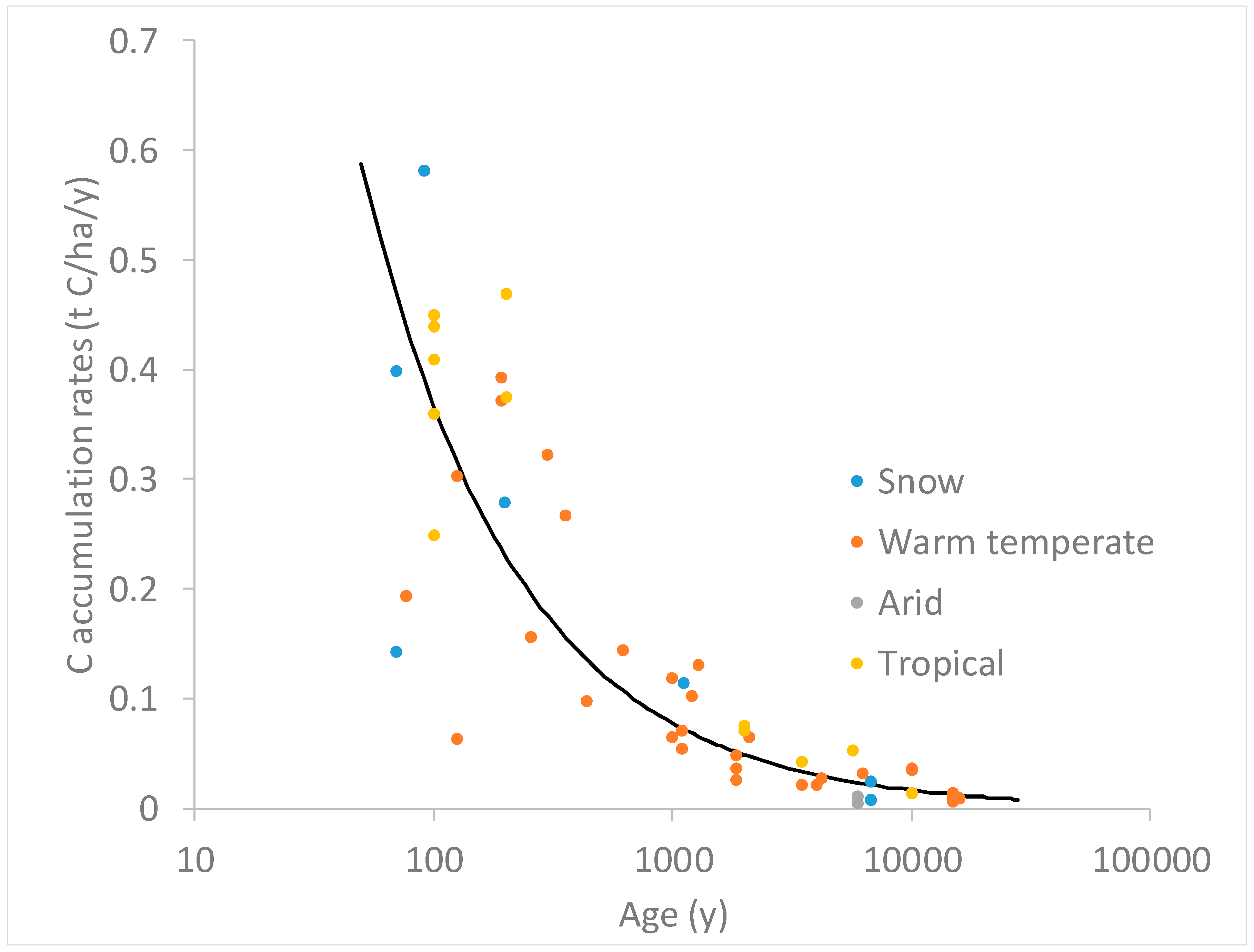
Figure 2. Soils adult in Mt. Anak Krakatau and primary vegetation. (Photos taken fifteen Apr 2015 past authors).
Figure ii. Soils adult in Mt. Anak Krakatau and primary vegetation. (Photos taken fifteen April 2015 past authors).
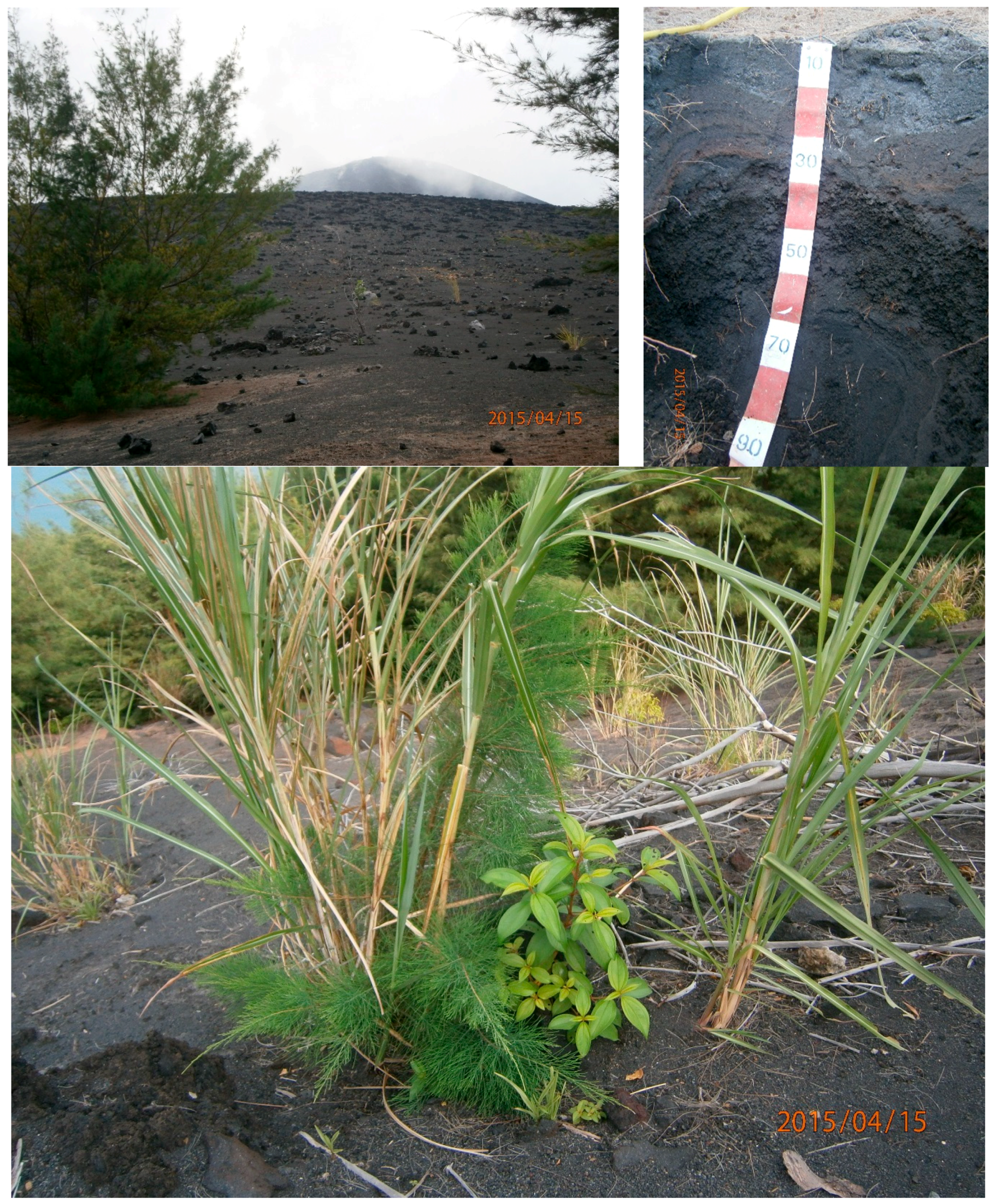
Figure 3. The eruption of Mt. Talang in April 2005. Photo by Authors.
Figure 3. The eruption of Mt. Talang in Apr 2005. Photograph by Authors.
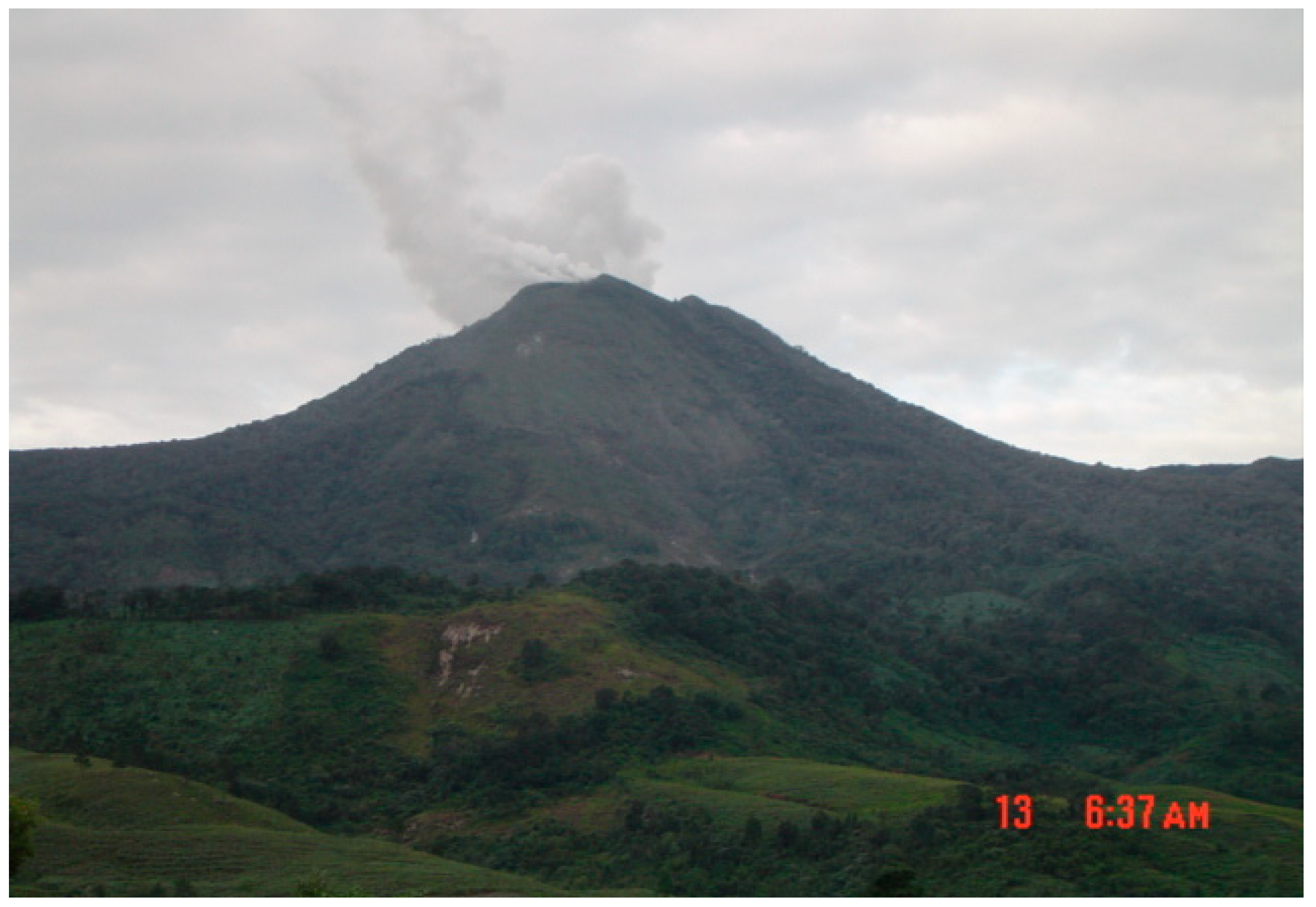
Figure 4. Changes in the surface volcanic ash layer during a pot experiment. Photo past Authors.
Figure iv. Changes in the surface volcanic ash layer during a pot experiment. Photo by Authors.
Effigy 5. Surface characteristics of a volcanic ash grain with its elemental composition. Photo past Authors.
Figure 5. Surface characteristics of a volcanic ash grain with its elemental composition. Photo by Authors.
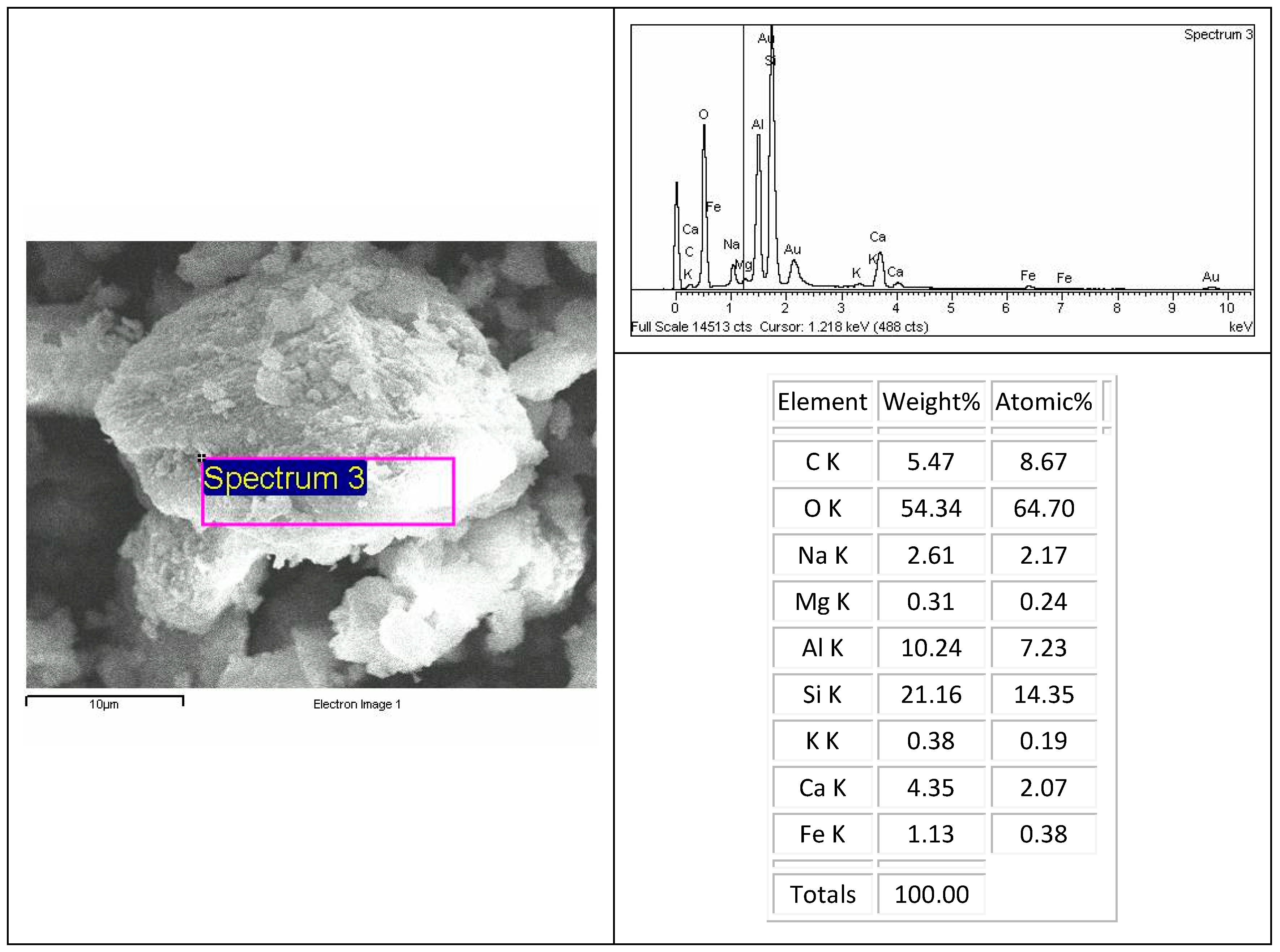
Figure 6. Soil C stock of volcanic ash (tephra) later iv years of incubation [40].
Effigy 6. Soil C stock of volcanic ash (tephra) afterwards four years of incubation [40].

Figure 7. Scanning electron microscopy of volcanic ash from Mt Talang after 46 months of incubation.
Figure 7. Scanning electron microscopy of volcanic ash from Mt Talang after 46 months of incubation.
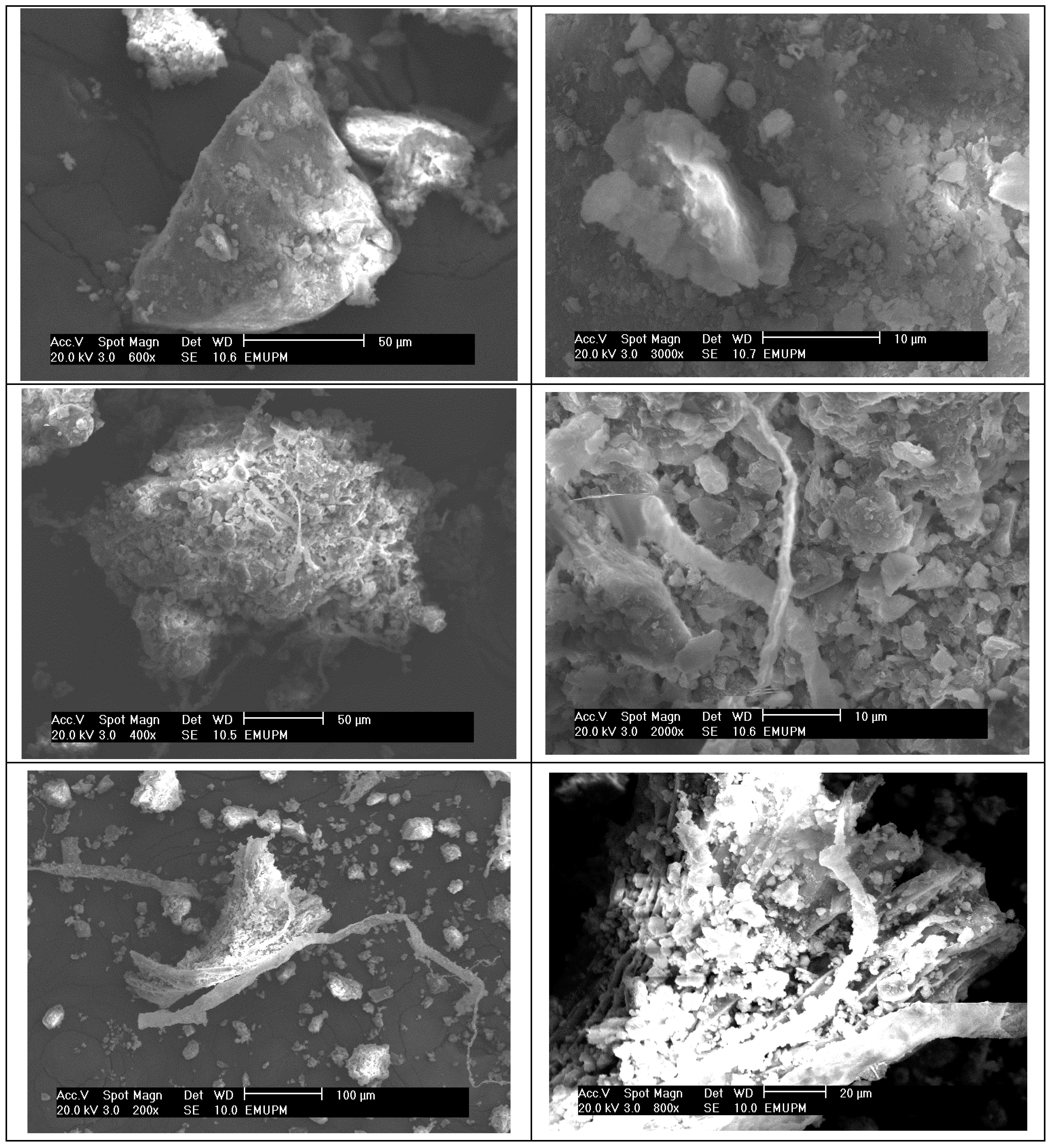
Figure viii. Root hyphae captured on a microscope (above) and micrograph of root hyphae attached to volcanic ash grains later 46 months of experiment. Photo by Authors.
Figure viii. Root hyphae captured on a microscope (above) and micrograph of root hyphae attached to volcanic ash grains after 46 months of experiment. Photo by Authors.
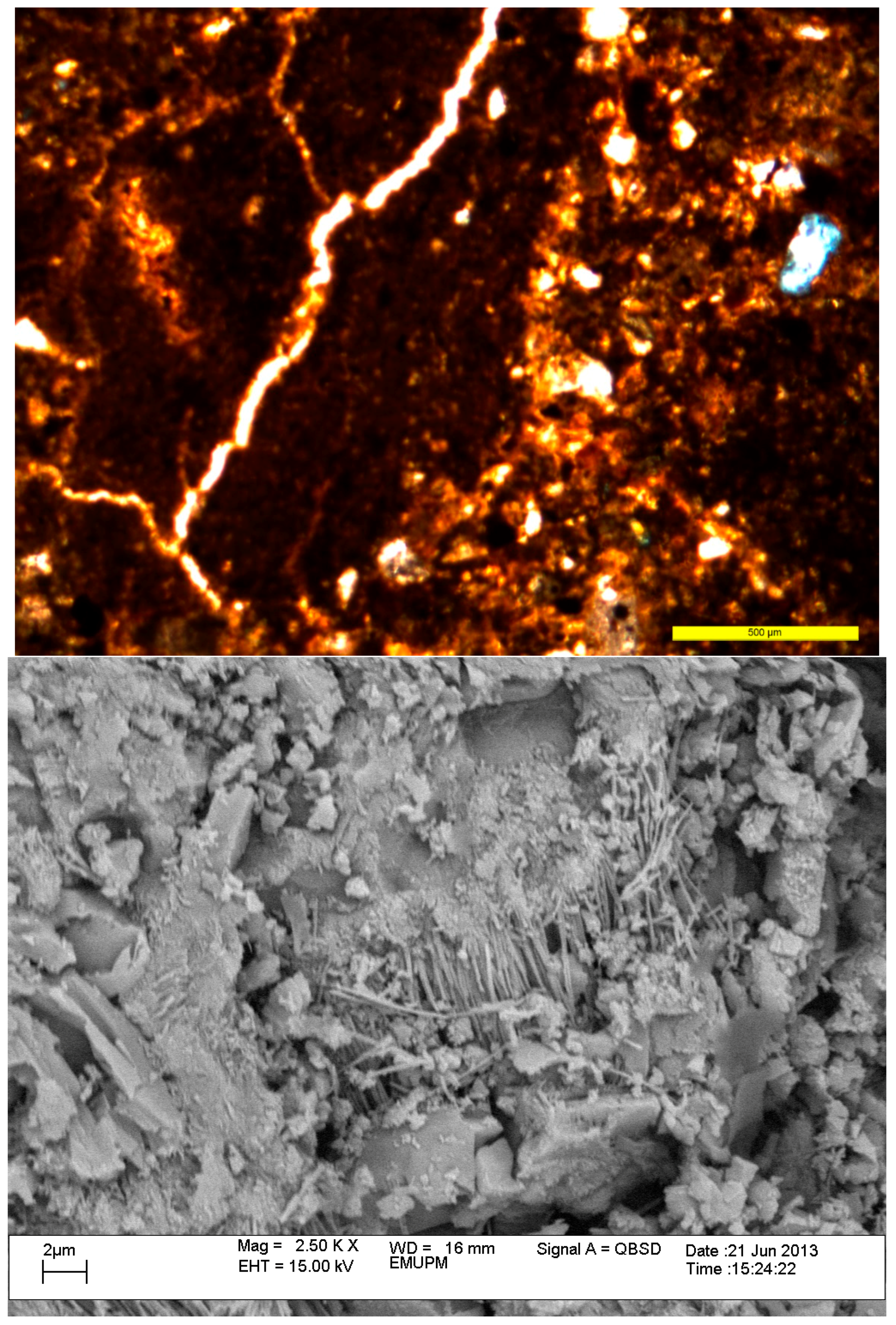
Figure ix. XRD traces of volcanic ash and volcanic ash changes after 46 months.
Effigy 9. XRD traces of volcanic ash and volcanic ash changes later on 46 months.
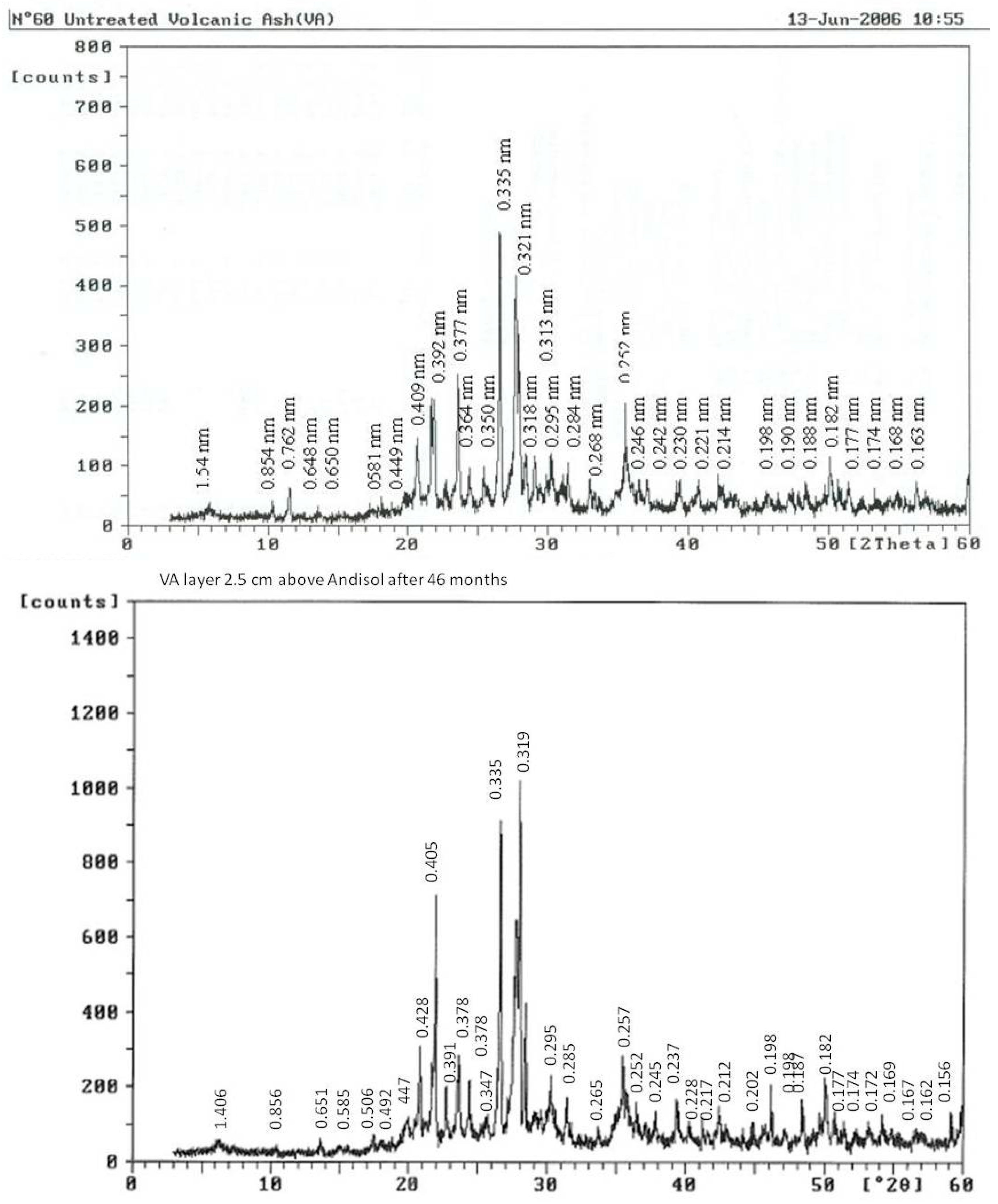
Figure ten. Volcanic eruption of Mt Sinabung and ashes covered Sigarang Garang Village in Jan 2014. Photo by authors.
Effigy ten. Volcanic eruption of Mt Sinabung and ashes covered Sigarang Garang Village in January 2014. Photo by authors.

Figure xi. Volcanic ashes from Mt. Sinabung covering local villages in January 2014. Photo by authors.
Figure 11. Volcanic ashes from Mt. Sinabung covering local villages in January 2014. Photo past authors.
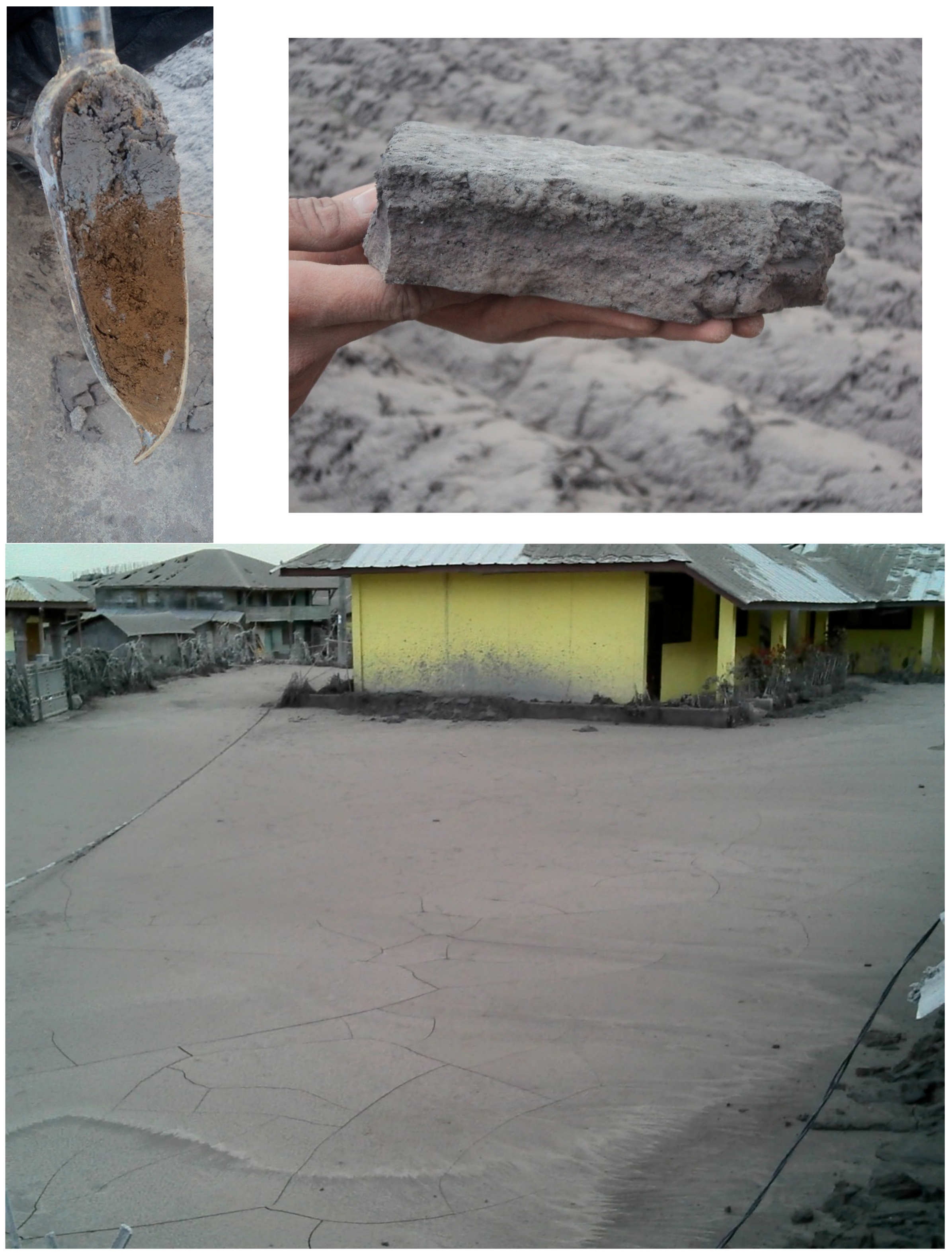
Figure 12. (A) Tephra deposit with initial carbon sequestration under atmospheric (B) Tephra in dry condition under a roof, three years after being deposited locally. Photo by authors.
Figure 12. (A) Tephra deposit with initial carbon sequestration nether atmospheric (B) Tephra in dry condition under a roof, 3 years after beingness deposited locally. Photo by authors.
Tabular array one. Carbon content and soil chemical backdrop of volcanic ash from Sinabung, which erupted in 2014, and measured in 2017.
Tabular array one. Carbon content and soil chemic backdrop of volcanic ash from Sinabung, which erupted in 2014, and measured in 2017.
| Samples | pH (H2O) | Total C (%) | Total Northward (%) | C/N |
|---|---|---|---|---|
| Ash with lichens (1 cm) | 6.56 | 4.240 | 0.007 | 618.72 |
| Ash with lichens (v cm) | 7.41 | 4.135 | 0.010 | 415.lxx |
| Ash with grasses | seven.48 | i.597 | 0.041 | 38.92 |
| Ash without plants | four.80 | 0.184 | 0.002 | 107.41 |
| Fresh Ash erupted 31 December 2016 | 5.90 | 0.099 | 0.000 |
Table 2. CEC, Silica and alumina content of volcanic ash materials of Sinabung.
Tabular array 2. CEC, Silica and alumina content of volcanic ash materials of Sinabung.
| Samples | CEC (cmolc kg−1) | SiO2 (mg kg−1) | Al2O3 (mg kg−1) | SiOii/AltwoO3 |
|---|---|---|---|---|
| Ash with lichens (one cm) | vi.45 | 63.15 | 12.32 | v.12 |
| Ash with lichens (v cm) | eleven.94 | 42.61 | 5.83 | seven.36 |
| Ash with grasses | x.03 | 43.49 | 6.14 | 7.07 |
| Ash without plants | eight.threescore | 49.23 | 11.27 | five.00 |
| Fresh Ash erupted 31 December 2016 | 1.91 | 63.68 | 15.16 | four.20 |
© 2019 by the authors. Licensee MDPI, Basel, Switzerland. This commodity is an open access article distributed under the terms and conditions of the Creative Eatables Attribution (CC BY) license (http://creativecommons.org/licenses/by/4.0/).
hollowayhenter1962.blogspot.com
Source: https://www.mdpi.com/2071-1050/11/11/3072/htm
0 Response to "What Causes Farmers to Return to the Slopes of Volcanoe to Begin Growing Crops Again"
Post a Comment