Market Down Again Due to Trade Wars
As we finally come out of the pandemic, the housing market has turned hot. Demand is extremely strong from first-time homebuyers, trade-up buyers, and institutional investors. But there's a chance the housing market is too hot. Therefore, it's worth worrying about the housing market again.
If you plan to buy a house, you should also think about what could go wrong. This way, you won't get blindsided in case things do. Think about all the people who bought real estate in 2007 and early 2008. Things were going wonderful, then the global financial crisis hit! If they had to sell before 2012, they likely lost money.
With the S&P 500 and NASDAQ selling off at the beginning of 2022, real estate investors should take note. The housing market frenzy should fade as interest rates rise. The Federal Reserve could also tighten too much, too often, and cause a recession. We already had a -1.4% 1Q2022 GDP print.
For the record, I am still bullish on the housing market over the next several years. The millennial generation is in full buying mode. Inventory and mortgage rates will remain low. Meanwhile, foreigners are likely going to flood the U.S. real estate market again after two years of being shut out.
But like any good investor, it's good to see the other side of the story.
A Slowdown In Housing Is Inevitable
The pace of house price growth will slow because it cannot outpace income growth by such a wide margin for too long. Bond-tapering and Fed rate hikes started on March 16, 2022. Meanwhile, house prices are high. Affordability is becoming an issue.
This pace of double-digit price appreciation in the housing market is unsustainable. Instead, I think home prices will rise by closer to 8% in 2022, not 16% like it did in 2021.
Let's go over some more details on why the housing market has some signs of concerns. With such concerns, you may want to invest in a publicly-traded REIT or a private eREIT from Fundrise, instead of buying a single asset with a large mortgage. Diversification is key in this hot market.
Why We Should Start Worrying About The Housing Market
Taking on massive debt to buy real estate at record highs is risky. You need to be sure you're following my 30/30/3 home buying rule before proceeding. If you follow my rule, you will significantly increase your chances of being able to comfortable afford your home.
Let's say you lose 50% on your stock and bond portfolio. You'll be upset, but be fine. If your property loses 20% of its value, however, this means you've lost 100% of your 20% downpayment.
Below is the latest U.S. house growth chart from January 1976 to June 2021. According to the Freddie Mac House Price Index, house price growth is at an all-time high. Noice the previous all-time high house price growth in the late 1970s and in 2006.
If you are buying property today, you need to be prepared for a potential rapid deceleration in prices. Therefore, you must buy property strategically if you do buy.

In this scenario, you'll also probably still be fine – if you don't have to sell. But when property prices correct by 20% or more, many people become forced sellers because they've also lost their jobs.
I understand that millennials are coming of buying age and inventory is on the decline, making competition for buying a home fierce. However, only if you are fully cognizant of the following points I've highlighted below should you proceed with a property purchase today.
Things To Know Before Buying Property Today
Before you buy one of the biggest assets in your life, it's good to know the current market condition. It's also good to know what could go wrong in the housing market.
1) Rents softened, but are recovering
Given property prices are a function of rental income multiples, a real estate buyer should be looking to buy at similar pricing discounts from peak rental periods.
Rents softened in major cities such as New York City, San Francisco, Seattle, and DC due to the pandemic. However, I anticipate rents to rebound once we achieve herd immunity. But they may not as people scatter to lower cost areas of the country.
Pay very careful attention to the latest monthly rental figures before buying property. Home prices have increased while rents softened in 2020. Therefore, the valuation for home is much higher. Rents need to aggressively rebound by 10% or more in 2021 and beyond in many major cities for valuations to return to normal.

2) Mortgage industry is still very tight
Here's what's going on in the mortgage industry, which is as stringent as it has ever been. Only people with 720+ credit scores and 20% downpayment have been able to get a mortgage. This is good in that a fallout is less likely in the future. But let's talk about some concerns.
Liquidity (Profitability) Concerns: A growing percentage of people are not paying their mortgages and banks are uncertain if and when payments will resume. As a result, his bank is only lending to the most financially fit customers.
Stricter Lending Standards: Due to liquidity (profitability) concerns, banks have significantly tightened lending standards. Here are some of the increased lending standards he mentioned to me back in 2020:
- Temporarily stopped allowing for cash-out refinances
- No longer fully counting RSU values when calculating how much a person can borrow
- Schedule E income (rental income) when calculating how much a person can borrow is no longer included
- No longer approving Home Equity Lines Of Credit (HELOC)
- Minimum downpayment is 20%
- Raised minimum credit score to qualify for a mortgage to 680
In other words, lending standards are as strict as it gets. As a result, perhaps there is upside to real estate liquidity if there is a reversion to pre-pandemic level standards sooner. But if lending standards continue to tighten, it may squeeze out the marginal buyer in the short-term.
3) Mortgage rates are finally creeping higher
Mortgage rates hit record lows in 2020. Now, mortgage rates are on the rise as bonds sell off and expectations for inflation is high.
My last mortgage refinance was in 4Q2019 when I locked in a 7/1 ARM jumbo ARM at 2.626%. I was pumped! However, today, that same rate might be at 2.875%. The average 30-year fixed-rate mortgage is closer to 3% today.
The problem with record-low mortgage rates is that thousands of Americans are tempted to buy too much house. Americans are violating my 30/30/3 home buying rule, which puts the future housing market in jeopardy.
Notice how mortgage rates have soared in 2022. The average 30-year fixed rate mortgage is back to about 5%. Still low by historical standards, but more than 1% higher than mortgage rates were in 2021.
Higher mortgage rates in 2022 is the biggest reason to worry about the housing market again. Higher mortgage rates WILL slow down the housing market, which is why you shouldn't get into crazy bidding wars. That said, I still think prices will increase in 2022 due to undersupply.

4) Prices have surpassed their previous peaks in many cities
While every city is different, if you look at the prices in Denver and Dallas, you'll find that the prices are roughly 45% higher than they were in 2006-2007. This price performance is similar to San Francisco's. Meanwhile, hot cities like Seattle and Portland are only about 20% above previous peaks.
The US median existing home price is about 40% higher than its previous peak in 2007. We're talking about a median existing home price from $250,000 in 2007 to $400,000 today. That's significant. But then again, 14 years have passed. As a real estate investor, your goal is to invest in markets that have both underperformed and have the potential to catch up.

5) Tax reform takes time to negatively impact housing prices.
Conceptually, we all know that limiting state income and property tax deductions to $10,000 and limiting mortgage interest deductions on new mortgages up to $750,000 are net negatives for expensive coastal city real estate markets. However, it takes 1-2 years to start feeling the crunch of tax reform.
Think about it. Let's say you own an average 3 bedroom, 3 bathroom home for $1.5 million. Your property taxes alone cost $17,000 – $20,000 a year, depending on which state you reside.
Let's say you earn $120,000 a year. You'll have paid $6,000+ in state income taxes. In the past, you could have deducted the entire $23,000 – $26,000 from your income. Now, you are limited to $10,000 in deductions.
Some will argue that lower income taxes will offset these deduction limitations. Perhaps.
With Joe Biden as President, a whole host of new taxes could be increased or introduced. Given the government is in a deficit, higher taxes or cuts to resources are an inevitability. Tax reform is a headwind, not a tailwind for coastal city property price appreciation.
6) Inventory is slowly creeping higher
The construction boom we've experienced over the past several years is finally showing up in the data as a wave of new inventory hits the market. When there's more inventory, pricing comes under pressure if demand doesn't follow. Below is the latest housing inventory under construction and authorized, but not started.


Here is a another inventory of single family homes chart that showed what happened once the pandemic began. However, as of 2Q2022, inventory seems to have bottomed out and is likely going to go back up again.
Here's another latest housing inventory chart by Altos Research. Housing inventory is still way below normal. However, it's good to keep an eye on inventory given prices are also much higher.

For some of the hottest cities for real estate, like Austin and Nashville, inventory is definitely creeping higher. If inventory gets too high, these heartland cities are at risk of a housing downturn. Take a look at this chart below that shows single-family permits way up for Austin, Dallas, and Nashville.
Personally, I wouldn't be investing in cities in the top-right quadrant. Instead, I would be investing in cities in the green, lower-right quadrant. You don't really want to invest in markets where home prices rose the most while also facing the most amount of increasing supply.

7) It takes a while to recognize a peak.
The housing boom that began in January 1996 ended in March 2006. But it wasn't until the beginning of 2008 that people started to accept that the housing market had already peaked.
Until 2008, property investors were still clinging to hope or at least were in denial that prices would no longer be going up. Once Bear Sterns was sold for nothing to JP Morgan in March 2008, people started to panic.
Then Lehman Brothers went under on September 15, 2008, a full two and a half years after the housing market peaked. And things got even worse, with the S&P 500 finally bottoming out on March 9, 2009. At least as of 3Q2020, we already experienced an aggressive 32% decline in the S&P 500 in March 2020.
Below is a great chart that shows how badly housing prices corrected in some of our major cities. Notice how the previous boom lasted 10 years and the crash lasted 5 years. Therefore, 20221 could be the peak in the current housing boom and we don't even know it for several more years.

8) The stock market has crashed multiple times
We saw a violent 20% sell down in the S&P 500 in 4Q2018. Then we saw a 32% decline from peak-to-trough in the S&P 500 by March 23, 2020. The S&P 500 and the NASDAQ corrected by 13% and 20%, respectively in 2022 already. As a result, investors need to watch out.
From policy errors by the Fed, to trade wars, to slowing global growth, to a potential war with Iran, to COVID-19, to a global pandemic, companies everywhere will be more cautious on their spending in 2022 and beyond.
Just know that prices tend to revert back to the mean or overshoot on the downside very 4 – 10 years. Real estate takes 2-5 years to correct, so there is no rush to buy now.
I'm predicting very mediocre S&P 500 returns for 2022. We could easily close the year down. So far, the S&P 500 is struggling in 2022 and the NASDAQ entered bear market territory.

Recognizing Signs Of Housing Market Strength
Although it's good to worry about the housing market again, let us also recognize that the housing market has continued to rebound. Here are some reasons for the housing market's continued strength in America.
- Low mortgage rates and negative real mortgage rates.
- The S&P 500 closed up 18% in 2020 and up 27% in 2021.
- A rotation out of volatile stocks into more stable real estate
- Still not enough inventory
- The increased desire for income / yield
- Demand from institutional real estate investors competing against retail investors.
- Foreign buyers will likely come back to the United States in 2022+ with over $200 billion in pent-up demand
- Massive home equity accumulation since 2020 alone, which will buffer downside risk

Buy Real Estate Responsibly
The mass media and the real estate industry will focus on strong demand, strong job growth, and a dearth of inventory as drivers for higher property prices in 2021 and beyond.

That's fine if you can surgically buy in strong job cities via real estate crowdfunding. The heartland of America is an especially attractive area to buy. Valuations are much cheaper and net rental yields are much higher. There should be a multi-decade trend of spreading out across America thanks to technology.
However, there are more deals to be had in expensive coastal cities like New York and San Francisco as well. Big cities are making a strong comeback and have lagged the overall U.S. real estate market during the pandemic.
If you're dying to buy a primary residence today, make sure you can withstand a 10-20% correction over a five year time frame. It's always good to plan conservatively. I don't think the housing market will crash in the next three years. In fact, I think we'll average high single digit gains through 2024.
If you don't have a financial buffer equal to at least 10% of the value of your property after putting down 20%+, then you are not financially prepared for a downturn. You need to try and buy at a price that is at least 5% lower than the previous comparable sale price.
Too much debt is really what will kill you if we ever return to hard times. Buy a house to enjoy life instead of looking to make a profit. As soon as you start hearing regular reports about people putting no money down, then it will be really time to worry about the housing market. But for now, real estate is likely going to continue to outperform equities.
Build Wealth Strategically Through Real Estate
Real estate is my favorite way to achieving financial freedom because it is a tangible asset that is less volatile, provides utility, and generates income. Stocks are fine, but stock yields are low and stocks are much more volatile. The -32% decline in March 2020 was the latest example. However, real estate held steady and appreciated in value then.
Investing in real estate crowdfunding is a solution for diversity and exposure. Instead of taking on a mortgage to buy real estate, you can simply invest in a diversified private eREIT through a firm like Fundrise. If you don't have the down payment or want to deal with tenants, investing through Fundrise is a hassle-free way to make passive income.
If you are a real estate enthusiast who likes to invest in individual deals, check out CrowdStreet. CrowdStreet focuses specifically on real estate opportunities in 18-hour cities where valuations are lower and rental yields are higher. The spreading out of America is a long-term trend thanks to technology.
I've personally invested $810,000 in real estate crowdfunding across 18 projects to take advantage of lower valuations in the heartland of America.
My real estate investments account for roughly 50% of my current passive income of ~$310,000. To be able to earn income 100% passively as I take care of my two young children is a dream come true.
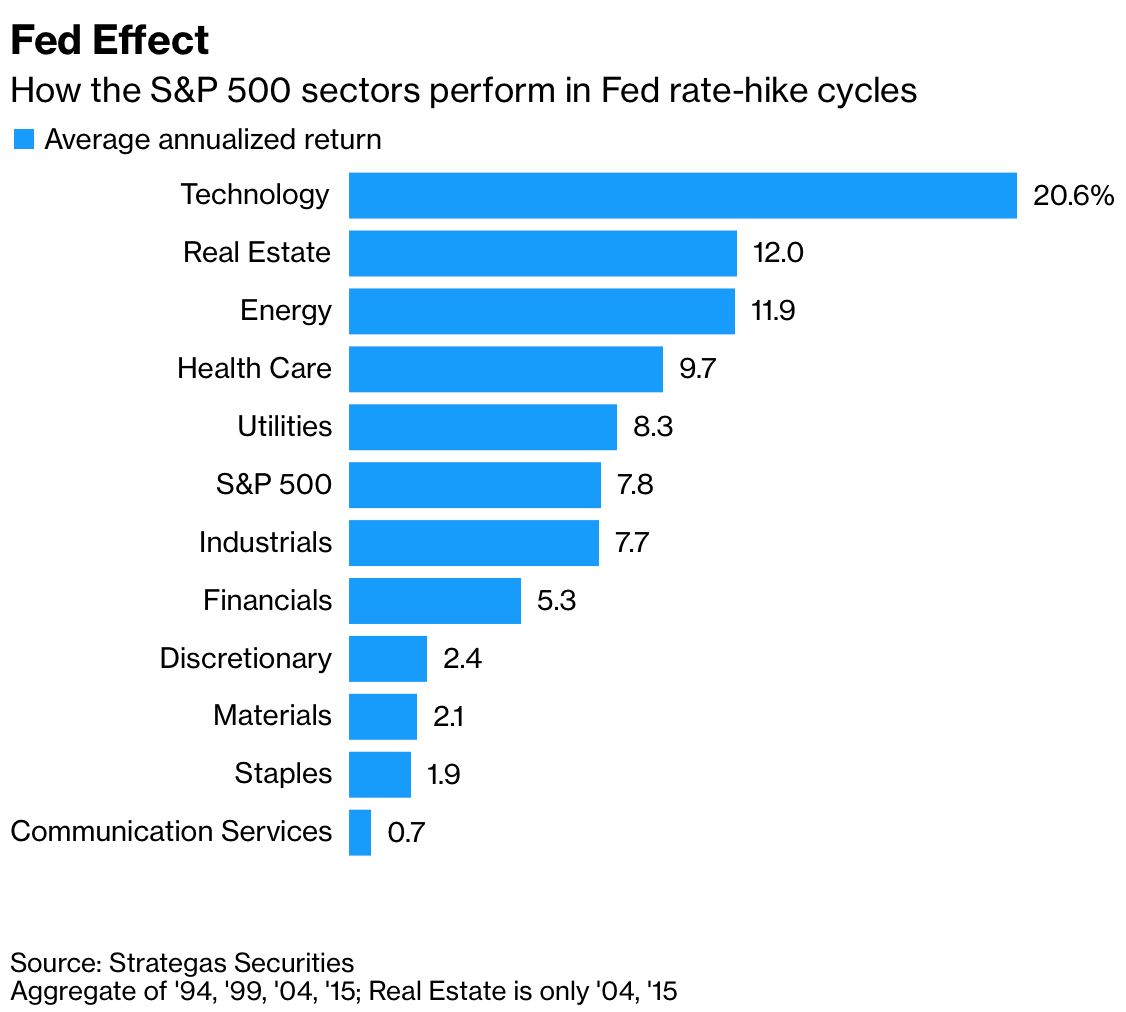
Below is a great chart regarding how real estate performs after previous Fed rate-hike cycles. Perhaps surprisingly, real estate performs very well because rising rents more than offset higher mortgage rates.
Refinance Your Mortgage
Check out Credible, my favorite mortgage marketplace where prequalified lenders compete for your business. You can get competitive, real quotes in under three minutes for free.
Mortgage rates are still near all-time lows, but they might start ticking up due to inflation. Take advantage and lock in a generationally low mortgage rate today. I was able to get a 7/1 ARM for 2.125% with zero fees for a new forever home I bought in 2020.
Buy The Best Selling Personal Finance Book

If you want to drastically improve your chances of achieving financial freedom, purchase a hard copy of my new book, Buy This, Not That: How To Spend Your Way To Wealth And Freedom. The book is jam packed with unique strategies to help you build your fortune while living your best life.
Buy This, Not That is already a #1 new release and #1 best seller on Amazon. By the time you finish BTNT you will gain at least 100X more value than its cost. After spending 30 years working in finance, writing about finance, and studying finance, I'm certain you will love Buy This, Not That. Thanks for your support!
It's Time To Start Worrying About The Housing Market Again is a FS original post. I've been a real estate investor since 2003 and own multiple properties today. Stay alert and bargain hard!
hollowayhenter1962.blogspot.com
Source: https://www.financialsamurai.com/time-to-start-worrying-about-the-housing-market-again/
0 Response to "Market Down Again Due to Trade Wars"
Post a Comment