Song Played.over and Over Again Comedian
the great $.25
The Musical Brilliance of John Mulaney's Stand-upward
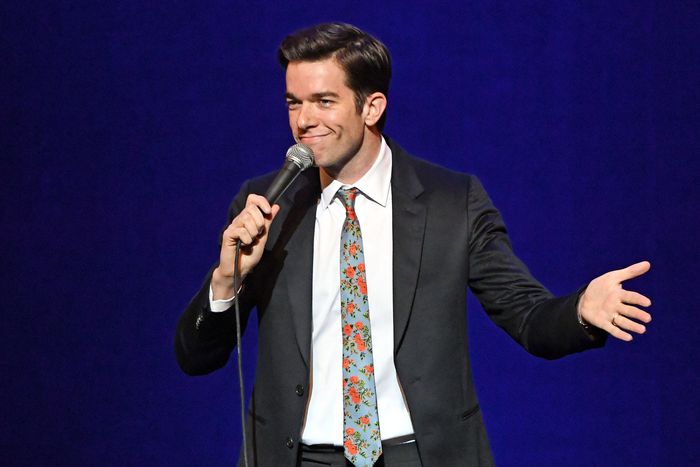
John Mulaney Photo: Kevin Mazur/Getty Images for Georgetown Academy
John Mulaney thinks about music a lot. His expressionless-on parodies of Les Misérables, Stephen Sondheim, and Steely Dan could only have come from a longtime fan. He has spent years with these songs and understands why they piece of work, and that comes through in his stand up-up. He composes his words with careful attending to the rhythms they create, and performs them with the precision of the best musicians. He hits every beat just right. Nowhere is this on meliorate display than in "The Salt and Pepper Diner," from his 2009 album,The Top Role. Listen to it now. It's magnificent.
Someone asked Mel Brooks the deviation between tragedy and one-act. He reportedly said, "Tragedy is when I cut my finger. Comedy is when you autumn into an open sewer and die." Mulaney knows his memory of diner misery has the potential to satisfy the comedy fan's appetite for voyeuristic sadism. Whether information technology is a lite snack or a hearty meal will depend on his execution.
The importance of rhythm to Mulaney is evident from the start of this bit. When he offset mentions the diner'south proper noun, a woman in the audience interrupts. He repeats the setup before proceeding, with the aforementioned number of syllables and then his punch line all the same lands on the intended shell. For Mulaney, cadence is as important as content.
I hate to remind anyone of grade-school music grade. I tin't imagine fifty-fifty Yo-Yo Ma has addicted memories of sitting in a plastic chair playing a saliva-drenched recorder, learning nigh quarter notes, one-half notes, and whole notes. Even so, understanding meter — how musicians split time into beats — is central to appreciating Mulaney's functioning. From that first joke, he is mindful of how long he takes to say each word and the amount of space he allows betwixt them. "Information technology'due south a wonderful family eating house in Chicago," he begins, at a relaxed pace. He hits the punch line faster. "Which means that information technology caters mainly to teenagers and homeless schizophrenics." The tempo alter gives him a bigger laugh, only like the chorus of "Smells Similar Teen Spirit" has more than touch on because Nirvana speeds up after the verse.
Mulaney enters the diner with his friend, who is as well named John. He addresses the coincidence with a one-liner and moves on to the meat of the story. John and John plan the same Tom Jones song — "What's New Pussycat?" — into the jukebox 21 times. They order their food and await for their mischief to deport fruit. Mulaney breaks downwardly the state of affairs for the audience: "Here's the matter about when 'What's New Pussycat?' plays over and over and over and over andover once more …" Merely saying "over and over" would convey the same significant with less syllables, only the three extraovers give the audience a existent-time gustation of the relentless repetition the diner customers are about to feel.
The audience knows there are 21 plays of "What'southward New Pussycat?" in the jukebox, but the people in the diner have no idea. Mulaney describes the reactions the patrons have the offset few times the song repeats. He begins each reaction with an assertion like "Hey!" or "Whoa!" Conventional comedy wisdom says these are needless extra words. No i leaves a one-act order thinking, I wish the setups were longer. For Mulaney, they are annihilation but superfluous. They human action like a drummer'due south cymbal crash. Questlove bashing his cymbal focuses attention on the music that follows, and Mulaney's "Whoa!" tells the audience, Listen upwardly, this next part is important.
Mulaney tells the crowd that the fifth play of the song is when the diner patrons begin to realize the nightmare they are trapped in. He pauses the story right before information technology happens. He builds the tension, painstakingly describing one of the customers, calculation detail after detail without giving the audience time to express mirth. "He's sitting in his berth, and his, like, manus is shaking while his stupid kids jump around, and he'southward been on to usa from the beginning, and he's staring at his coffee cup likethis, and he has this look on his face likeAww …" Some other cymbal-crash exclamation makes sure the crowd is dialed in. "… Like he just got his 30-day chip from anger management." This man is now a stand-in for the reaction of the entire eating house. Mulaney prolongs the moment as long as he can before giving the audience their release. "The fourth play fades out," he says. "It's dead quiet." He pauses for 4 seconds. Almost cruelly, he slows down even farther. "And so — I don't know if you know this — just the song beginsvery subtly." From absolute silence, Mulaney blurts "Bwaaaa-bwamp! What's new pussycat?" And so, without a jiff, "And the guy goes, 'Goddamnit!'and pounds on the tabular array, and silverware flies everywhere, and it wasfaaaantastic!" The oversupply erupts.
Mulaney gives the audience a mere iii seconds to applaud and picks right support once more. "But a discussion about my friend John, and what a genius he was." So far, Mulaney has paused his story, slowed information technology down, and zoomed in for item. Now, he reveals a crucial scene he had left out, like Quentin Tarantino inJackie Dark-brown.We are back with the boys choosing the songs at the jukebox. "I punched in about seven," Mulaney says, "then John says to me, 'Hey hey hey, look.'" With three "heys" the audience knows this next role is large: There is one "It's Not Unusual" sandwiched between plays of "What's New Pussycat?"
"And that is when the afternoon went from good to great. Afterseven! "What's New Pussycats!" in a row!" Mulaney barks, relishing each word similar a prosecutor reminding the jury of the defendant's heinous crimes. "It's Not Unusual" comes on. Mulaney describes "thesighofreliefthat swept through the diner," giving each word equal duration and punch. The audience bursts into joyous applause. This time, he lets them finish their laugh, breathe, and relax. What's coming next deserves its own trounce. In low, ominous tones, Mulaney interjects, "And on the other manus, when we went back …" He is on the verge of revealing what happened when "What'south New Pussycat?" played once more, just he never finishes the sentence.
There is a platitude that the genius of jazz musicians is not in the notes they play but in the notes they don't play. It doesn't make much sense. In musical annotation, a note you don't play is still a note. It'southward chosen a balance, and you write it correct there on the folio. In that location are whole rests, half rests, and quarter rests, each ready for utilise when the sound you crave is the sound of silence. Mulaney rests for three seconds before exclaiming, "Holy shit!" He gets a large laugh and the audience's undivided attention. Six more than seconds become by. At a snail's pace, he continues, "'It's Not Unusual' fades out …" For ten more than seconds, he says nothing at all.
Every instinct in a comedian'southward body screams that silence is unsafe. The crowd might lose interest, get bored, or heckle. Mulaney holds his ground. He knows this is right. The audience giggles in nervous anticipation. "It's dead quiet," he says. He waits until the room is as soundless equally the diner in the story before belting out "Bwaaaa-bwamp! What's new pussycat?" and so, with equal, auto-tool-precise emphasis on each syllable, he says, "People went fucking insane." The audience does, as well.
"Andthat was the all-time meal I've always had!" Mulaney concludes his story with the same words he began it with, similar the Beatles' reprise of "Sgt. Pepper" on Side Two. The audience is clapping by the word that. They know they witnessed something special. Subsequently 25 seconds, they are however applauding as the track fades out.
"The Salt and Pepper Diner" is a story well-nigh the power of music to shape people's emotions. It can "brand grown men and women weep tears of joy," and it can brand them experience like they are losing their minds. Mulaney demonstrates the power he describes. He uses his ain instrument — his vocalization — to control his audience'southward feelings as completely as the songs in that jukebox controlled the mood in the diner.
When a story falls flat, people say, "I guess you had to be there," A great comedian can take you there. They tin brand you experience every moment like it'southward happening to you, with only their voice. But talking won't cut it. It takes conscientious planning, intense concentration, and attention to each millisecond of their delivery to wring out everything their instrument is capable of. When this is done at the highest level, you get "The Salt and Pepper Diner."
hollowayhenter1962.blogspot.com
Source: https://www.vulture.com/2019/11/john-mulaney-salt-and-pepper-diner-joke.html
0 Response to "Song Played.over and Over Again Comedian"
Post a Comment